
Finding the best 1000w solar generator often comes down to how you balance recharge speed against portability. While total capacity is similar across most models, the ability to use a fast UPS switchover or rapid wall-charging modes truly separates the options. The Jackery Solar Generator 1000 v2 leads for most users due to its balance of power and app-controlled efficiency.
All 10 products side by side — scroll sideways to see every column.
| Top Pick | Best for Compact Storage | Best for Content Creators | Best for Home Backup | Best for Camping Trips | Best for Silent Operation | Best for Rapid Charging | Best for Solar Convenience | Best for Solar Kits | ||
| Preview |  |  | 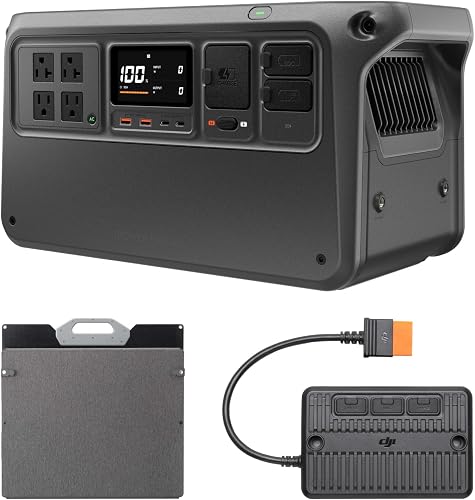 |  |  |  |  |  |  |  |
|---|---|---|---|---|---|---|---|---|---|---|
| Product | Jackery Solar Generator 1000 | Anker SOLIX C1000 | DJI Power 1000 | GRECELL 999Wh Power Station | EBL 1000W Power Station | 1000W LiFePO4 Power Station | DJI Power 1000 V2 | AFERIY 1024Wh Generator | BLAVOR 1600W Generator | Jackery Solar Generator 1000 v2 |
| Brand | Jackery | Anker | DJI | GRECELL | EBL | STARYLINE | DJI | AFERIY | BLAVOR | Jackery |
| Best for | Best Overall | Best for Compact Storage | Best for Content Creators | Best for Home Backup | Best for Camping Trips | — | Best for Silent Operation | Best for Rapid Charging | Best for Solar Convenience | Best for Solar Kits |
| The listing says | 10ms UPS with multiple output ports 1,500W AC output with 3,000W surge peak | 2,000W output with 9 ports 1,024Wh capacity in compact design | 2600W stable output for 99% of appliances Recharges to 80% in 37 minutes | 999Wh capacity with 1000W continuous output 10 output ports for simultaneous charging | 999Wh capacity with 1000W continuous output 10 output ports for simultaneous charging | 1000W power with 1024Wh capacity Optional 200W solar panel included | High-capacity generator for 99% of appliances Recharges to 80% in 37 minutes | 1800W AC output with 1024Wh capacity LiFePO4 battery with 4000+ charge cycles | Built-in 40W solar panel 1024Wh capacity with 1600W rated output | 1,500W AC output with 3,000W surge peak 0% to 100% charge in 50 minutes |
| More information | Check Latest Price on Amazon | Check Latest Price on Amazon | Check Latest Price on Amazon | Check Latest Price on Amazon | Check Latest Price on Amazon | Check Latest Price on Amazon | Check Latest Price on Amazon | Check Latest Price on Amazon | Check Latest Price on Amazon | Check Latest Price on Amazon |
Head to Head on What Matters
Recharge Speed
The speed at which these units return to full capacity varies significantly. The DJI Power 1000 V2 stands out by reaching 80% charge in just 37 minutes. Similarly, the Jackery Solar Generator 1000 v2 offers a 50-minute emergency charging mode via its app.
If you need the fastest possible turnaround, look for models with app-enabled emergency modes. Be aware that these modes often default to slower speeds to preserve battery health; you must manually toggle the setting before each charge. Other models like the Anker SOLIX C1000 require up to 1.8 hours for a full solar recharge, while the GRECELL 999Wh Power Station typically takes 8-12 hours for a full AC wall charge.
Portability and Weight
Weight is a major factor for those moving their unit between vehicles or campsites. The EBL 1000W Power Station and the GRECELL 999Wh Power Station both feature a lightweight 17-pound frame. The Jackery Solar Generator 1000 v2 weighs 23.3 pounds, while the AFERIY 1024Wh Generator sits at 25.57 pounds.
The AFERIY model is noted by the manufacturer as being 25% lighter than many comparable units, making it easier to transport for those who prioritize a slim, one-hand-friendly design. If you struggle with heavy lifting, check the dimensions as well as the weight; a more compact frame often makes a unit feel lighter even if the poundage is similar to bulkier competitors.
Battery Lifespan
Modern units rely on LiFePO4 battery chemistry to ensure longevity. Both the Jackery Solar Generator 1000 v2 and the Anker SOLIX C1000 are rated for 4,000 charge cycles while maintaining 70% to 80% of their original capacity. This chemistry is generally recognized for its stability and long service life.
The GRECELL 999Wh Power Station offers 2,000+ cycles, reflecting a different approach to battery management. When comparing these, remember that a higher cycle count usually correlates to a decade of daily use. If you only use your generator for occasional camping trips, the difference between 2,000 and 4,000 cycles may be negligible, but for home backup during frequent outages, the higher cycle count is a critical investment.
What the Numbers Mean for You
When you see a 1000W output, it defines the limit of what you can plug in at once. If you try to power a high-wattage device like a space heater or a large coffee maker, you might exceed the 1000W continuous limit. Always check the labels on your appliances before plugging them in. The surge peak—often listed at 2000W or 3000W—only helps for a few seconds when a motor first starts, like a fridge compressor kicking on. It isn’t for sustained use.
Recharge times are equally important. A unit that charges in under an hour is a massive help when you have short windows of access to grid power. If you mostly rely on solar panels, focus on the MPPT efficiency and the maximum solar input wattage rather than the wall-charging speed. A bigger number here means you spend less time waiting and more time using your gear.
Battery longevity is a critical long-term metric. Most modern LiFePO4 units offer 4,000 charge cycles before dropping to 70% or 80% capacity. If you use your station daily, this ensures a decade of service.
Finally, consider the UPS switchover time. If you need to keep a CPAP machine or a computer running during a blackout, look for a 10ms switchover. This speed prevents your sensitive electronics from shutting down when the power cuts. If the device doesn’t list a UPS time, assume it can’t protect your equipment during an outage.
1. Jackery Solar Generator 1000 v2 and 200W Solar Panel
Best for: Reliable performance and app-controlled power management.
The Jackery Solar Generator 1000 v2 balances a 1,500W AC output with a 1,024Wh capacity. Its 50-minute fast charging mode makes it highly efficient for those who need power on a tight schedule. The inclusion of an ultra-fast 10ms UPS switchover ensures your sensitive electronics remain powered during sudden outages. This unit isn’t ideal for users who need a device under 20 pounds, as it weighs 23.3 pounds.
To maximize battery health, the unit defaults to a 1.7-hour charging cycle. If you require the 50-minute emergency charge, you must manually enable this function in the Jackery App before every session. Using the app, you can also toggle between a 30 dB quiet mode for overnight use or an energy efficiency mode.
The LFP battery is built for longevity, maintaining over 70% capacity after 4,000 charge cycles, which translates to a 10-year lifespan. When ordering, provide a physical street address, as the unit can’t be delivered to a PO Box. Note that the generator and the 200W solar panel ship separately.
Pros
- Fast 10ms UPS switchover.
- App control for charging modes.
- The battery is engineered for an exceptionally long operational life.
- 1,500W continuous AC output.
Cons
- Heavier than some 17lb alternatives.
2. Anker SOLIX C1000 Gen 2 Solar Powered Generator with 200W
Best for: Rapid solar recharging and compact storage.
The Anker SOLIX C1000 Gen 2 offers a 2,000W output, which is higher than many competitors in this class. Its ability to accept 600W of solar input allows for a full recharge in 1.8 hours. The unit is designed to be 14% smaller and 11% lighter than similar models, making it easier to pack for road trips.
If you receive your order in two boxes, check the package labels immediately. Because the power station and the 200W solar panel are dispatched separately, arriving at different times is standard. Don’t assume a missing item until you confirm the tracking status for both shipments.
The device features a 10 ms UPS switchover, ensuring your CPAP machine or laptop stays powered during grid failures. You should use the Anker app to activate TOU mode. This setting intelligently schedules your power usage to align with off-peak grid hours.
The Anker SOLIX C1000 requires external solar panels for solar charging. While the battery is built for extensive daily use, you must ensure your solar array doesn’t exceed the 60V maximum input.
Pros
- High 2,000W AC output with 3,000W peak.
- Compact, portable frame.
- 10 ms UPS backup speed.
- Designed for long-term, heavy-duty durability.
Cons
- Requires external solar panels.
- Separate shipping for components.
3. DJI Power 1000 V2 200W Foldable Solar Panel Combo
Best for: High-speed charging and content creators.
The DJI Power 1000 V2 is built for speed, hitting 80% charge in only 37 minutes. It provides dual 140W USB-C ports, which is excellent for charging high-end laptops quickly. This output is 40% higher than typical dual 100W setups, ensuring you stay in flow during heavy content creation.
The unit runs at a very quiet 26 dB. This makes it perfect for use in small camper vans or bedrooms where you need to sleep undisturbed while charging devices.
If you’re using this for home backup, the 10ms UPS switch time is critical. It’s twice as fast as the previous Power 1000 model, preventing data loss or hardware resets during sudden power outages.
This generator isn’t intended for users who need a simple, entry-level interface. Its 2600W stable output powers 99% of appliances, including heavy tools like saws and drills. If you only need to charge a phone or a small light, these advanced features may be overkill.
Pros
- Extremely fast 37-minute recharge to 80%.
- Very quiet operation at 26 dB.
- Dual 140W USB-C ports.
- 10ms UPS switch time.
- Durable 10-year battery lifespan.
Cons
- Advanced feature set may be complex.
- Overpowered for basic camping needs.
4. GRECELL 999Wh Portable Power Station 1000W
Best for: Lightweight portability and home backup.
The GRECELL 999Wh Power Station weighs only 17 pounds, making it one of the most portable options available for its capacity. It features ten output ports, allowing you to charge multiple devices at once during an emergency. The inclusion of a wireless charging pad is a convenient touch for mobile devices, helping to reduce cable clutter.
This unit isn’t for those who need an output higher than 1000W, as it’s strictly limited to that continuous power rating. While it handles a 2000W peak, you must ensure your appliances don’t exceed the 1000W limit for sustained operation. If you’re powering a high-draw appliance like a space heater, check the wattage first to avoid triggering the overload protection.
Pros
- Very lightweight at 17 pounds.
- Ten simultaneous charging ports.
- Built-in wireless charging pad.
- Integrated LED light with SOS.
- LiFePO4 battery rated for 2000+ cycles.
Cons
- Lower 1000W continuous output limit.
- AC recharging takes 8-12 hours.
The system uses an advanced Battery Management System to protect against short-circuits and thermal extremes. You can use pass-through charging to keep devices powered while the station itself recharges via solar or wall outlets. Use the slow-charge mode if you aren’t in a hurry, as this helps extend the overall lifespan of the battery.
5. EBL 1000W Portable Power Station
Best for: Outdoor adventures and camping trips.
The EBL 1000W Power Station is a lightweight contender at 17 pounds, offering a 999Wh capacity. It excels at charging multiple devices simultaneously, thanks to its mix of AC, DC, and USB-C ports. The unit includes silent cooling fans to manage heat during operation.
To estimate your actual runtime, multiply the 999Wh capacity by 0.85, then divide by your device’s wattage. If you ignore this conversion rate, you’ll overestimate how long your gear stays powered. Always turn off the AC output when not in use, as the unit will continue to drain the battery even without an active load.
The EBL 1000W Power Station is designed for devices with a combined power of less than 1000W. If you attempt to power a device rated above this threshold, the internal safeguards will trigger a shutdown.
Pros
- Compact 17-pound frame.
- 60W PD fast charging.
- Silent cooling fan system.
- Ten simultaneous charging ports.
Cons
- Not for devices exceeding 1000W.
- Requires manual AC shutoff to prevent battery drain.
6. 1000W Portable Power Station 1024Wh LiFePO4
Best for: Durable battery chemistry and flexible color options.
The STARYLINE 1000W LiFePO4 Power Station uses a car-grade battery rated for 1,000+ cycles while retaining 80% capacity. It’s a solid choice for homeowners needing a backup source for small appliances like mini-fridges. The unit weighs 18 pounds, which is helpful for moving it around the house.
If you’re using this outdoors, pair the station with the 200W solar panel. The 23% conversion rate allows for a full charge in 6-8 sunny hours. You can operate the unit in temperatures from -10C to 40C, but avoid exceeding these limits to prevent safety protection triggers.
For office or home use, the 60W PD USB-C port is the most efficient choice, as it charges a laptop to 50% in 30 minutes. If you’re charging five devices at once, prioritize the AC outlets for high-draw appliances to avoid bottlenecks.
Pros
- Durable LiFePO4 battery chemistry.
- Lightweight 18-pound design.
- Multiple color options available.
- Simple, reliable interface.
Cons
- Fewer charge cycles than some premium models.
- Requires 6-8 hours of direct sun for solar replenishment.
7. DJI Power 1000 V2 Portable Power Station
Best for: Professional-grade power and silent operation.
This version of the DJI Power 1000 V2 highlights the brand’s focus on build quality and safety, featuring flame-retardant housing and an intelligent BMS. It provides the same 26 dB quiet operation and fast charging capabilities as the previous entry. It’s a premium choice for DIY enthusiasts who need to power tools like saws and drills in remote locations.
If you require emergency backup, the 10ms switch time provides a seamless transition that’s twice as fast as the previous model. This ensures your essential home devices keep running without interruption during sudden outages. Use this unit when you need to power 99% of common appliances, from kettles to heavy-duty saws.
The dual 140W USB-C ports offer 280W of total output, which is 40% more power than standard 100W setups. If you’re a content creator, this extra capacity maintains your momentum by charging high-drain gear faster.
It isn’t for buyers on a budget who don’t need the extra-fast USB-C power delivery or the rapid 10ms UPS switch.
Pros
- Flame-retardant housing and a battery built to last for a decade.
- 280W total USB-C power.
- 5-year warranty for long-term reliability.
- Ultra-silent 26 dB operation.
Cons
- the box lists DJI Power 1000 V2 and a DJI Power AC Power Cable and not solar panels
8. AFERIY Portable Power Station 1024Wh Solar Generator 1800W
Best for: Long-term usage and frequent travelers.
The AFERIY 1024Wh Generator is built for longevity, boasting 4,000+ charge cycles. This provides a decade of service, which triples the lifespan typical of standard lithium-ion batteries.
It is 25% lighter and 16% smaller than most competitors. This makes it ideal for backpackers or those with limited storage space in a car or RV. If you need to move your power source frequently, this design is significantly easier to manage than bulkier units.
The 10ms UPS switchover provides reliable backup for critical devices like computers or medical freezers. Because this is twice as fast as the 20ms standard, it prevents data loss during sudden outages. However, if you prefer a “plug-and-play” experience without digital oversight, be aware that the companion app is required to unlock full control. You’ll need to set this up to monitor battery status or schedule charging.
Pros
- 4,000+ cycle battery life.
- 25% lighter than comparable models.
- Fast 10ms UPS switchover.
- 13 multi-purpose output ports.
Cons
- Requires app setup for full control.
- Not for users avoiding digital interfaces.
9. BLAVOR 1600W Solar Generator
Best for: Integrated solar charging convenience.
The BLAVOR 1600W Generator distinguishes itself by housing a 40W solar panel directly within the unit. This design eliminates the need to carry separate gear for basic charging needs during camping or RV trips. If you prioritize portability and minimizing loose accessories, this integrated approach is your best choice.
The 1024Wh capacity supports a 1600W rated output, peaking at 3200W. This headroom allows you to power demanding appliances like coffee makers or refrigerators that would stall smaller 1000W units. You can connect up to eight devices simultaneously using the onboard ports.
If you require rapid solar replenishment, the built-in 40W panel will prove insufficient. In these cases, you must connect a compatible external panel to utilize the 200W solar input capacity. Relying solely on the onboard panel for primary charging is a common mistake that leads to long wait times.
The unit utilizes LiFePO4 battery cells rated for over 4,000 charge cycles. A smart battery management system monitors for overheating and short circuits, ensuring safety during home power outages. Use the bidirectional 100W USB-C port for fast-charging your mobile devices.
Pros
- Built-in 40W solar panel.
- Higher 1600W output capacity.
- 4,000+ cycle LiFePO4 battery.
- Includes 10 adapter connectors.
Cons
- Built-in panel is for slow charging.
10. Jackery Solar Generator 1000 v2 and 2x100W Solar Panel
Best for: Comprehensive solar kits and fast charging.
This kit includes two 100W solar panels, providing a complete off-grid power solution. The 1,024Wh LiFePO4 battery delivers a 1,500W AC output with a 3,000W surge peak. It handles heavy loads like fridges, AC units, and electric pots with ease.
The system features a 10ms UPS switchover to protect essential electronics during outages. You can reach a full charge in 1.25 hours for daily use, or toggle the Jackery App for a 50-minute emergency charge. Use the standard mode to maximize long-term battery health.
Pros
- The battery maintains high performance levels over a long-term service life.
- 100W PD fast USB-C charging.
- Six ports for simultaneous device charging.
- Weighs 23.37 lbs with an ergonomic handle.
Cons
- Panels and generator ship separately.
- Requires more space for dual-panel setup.
If you need power for a road trip, use the 100W USB-C ports to charge laptops without needing extra bulky adapters. If you’re preparing for a power outage, keep the unit plugged in to utilize the 10ms UPS feature. This ensures your devices stay powered without interruption when the grid fails.
The system is designed for longevity, offering four times the lifespan of the previous Explorer 1000 model. While the panels are foldable and lightweight, remember they require more setup room than a single-panel kit. Always verify your essential devices fall under the 1,500W output limit before relying on the unit for critical medical or home equipment. If you find the generator and panels arrive on different days, contact customer support for tracking updates on both shipments. This unit is the pinnacle of portable power for those who prioritize both speed and sustainable, long-term performance.
Frequently Asked Questions
Is a bigger battery capacity always better?
Not necessarily. While a larger capacity allows you to run devices for longer, it also increases the weight and the size of the unit. If you’re only powering a phone or a laptop for a weekend trip, a 1000Wh unit is often more than enough. Larger batteries also take longer to recharge, which can be a disadvantage if you don’t have constant access to high-wattage solar panels or grid power.
What does the UPS switchover time actually mean?
The UPS (Uninterruptible Power Supply) switchover time refers to how quickly the generator takes over when grid power fails. A 10ms switchover is fast enough to keep a computer or medical device running without the power cutting out. If a device has a slower switchover, your computer might shut down or restart during an outage. Always prioritize a low millisecond rating if you’re using the generator for vital equipment.
How do I compare different recharge methods?
Compare recharge methods by looking at the input wattage allowed for each. AC wall charging is usually the fastest, but solar charging depends on the weather and the size of your panels. If a unit supports 800W of solar input, it will charge much faster than one capped at 200W. Always ensure the unit has an MPPT controller, as this maximizes the efficiency of the power you get from the sun.
Does a higher peak wattage help with everyday use?
The peak wattage is only for starting motors that require a brief power burst. It doesn’t mean you can use a 2000W appliance continuously. Most 1000W generators are designed to handle an occasional surge from a fridge or tool, but they will shut down if you try to run high-wattage heaters or stoves for more than a few seconds. Always check your device’s “rated” or “continuous” wattage, not just the peak.
Conclusion
Choosing the right power station doesn’t have to be complicated once you identify your must-have features. Before you commit to a purchase, check your most important appliances’ wattage labels to ensure they’ll run smoothly. You’ll be glad you did, as it’s the best way to guarantee you’re prepared for any unexpected outage.