
Finding the right tool for heavy-duty kitchen work depends entirely on your specific needs, as there’s no single best best meat cleaver for cutting bone for every cook. You should choose based on how often you process whole animals, the thickness of the bones you typically encounter, and your personal preference for blade weight versus agility. These products differ primarily in their material composition, handle ergonomics, and overall mass, which dictates how much force you must exert during a cut. If you want the most substantial tool for heavy-duty butchery, the Dalstrong Obliterator 9-Inch is a top contender, while those seeking a smaller, more maneuverable option for lighter tasks may prefer the HENCKELS Classic 6-Inch.

- 9-inch heavy cleaver for meat prep
- 6mm-thick blade and 2.9 lb weight
- High-carbon 7Cr17MoV full-tang blade
- Thick black G10 handle for grip
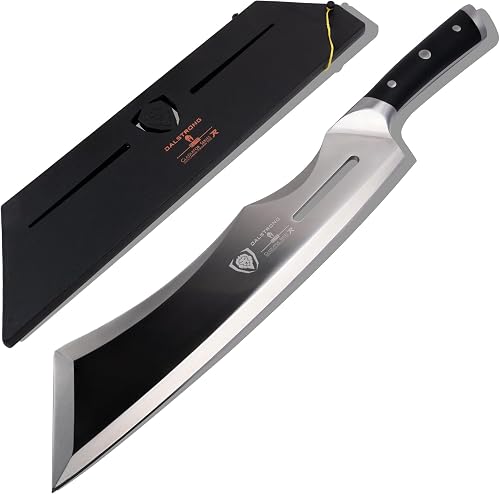
- 14-inch 7Cr17MoV steel, 6mm thick, 2.9 lbs
- Hand-polished satin finish, NSF certified
- Military-grade G-10 handle, full-tang construction
- Includes acacia stand and PerfectFit sheath

- 7cr18mov steel, 60 HRC hardness
- Heavy-duty axe shape for bone cutting
- Ergonomic triple-riveted pakkawood handle
- Hand-forged with cold forging process

- Professional-level sharp blade
- Satin-finished, finely honed edge
- Lightweight for effortless cutting
- Trims fat and cuts small bones

- 8-inch stainless steel blade
- Versatile for home or professional use
- Integrated hole for convenient storage
- Ergonomic wood handle for comfort

- 7Cr17MoV carbon stainless steel, 58±2 HRC
- Heavy-duty V-shape axe blade
- Ergonomic full tang pear wood handle
- Multipurpose for meat, vegetables, and bones

- High-carbon stainless steel bone cleaver
- 7.25-inch blade for meat and aromatics
- Forged blade with American walnut handle
- Hand wash the walnut handle

- Thick spine for hard ingredients
- German steel, HRC56 ±2 hardness
- Hand-polished 18-degree edge
- Ergonomic tan and black handle

- Side grooves for easier chopping
- German high carbon steel, 14-16 degrees
- 56+ Rockwell hardness, rust resistant
- Triple-riveted ergonomic pakkawood handle

- 5.7-inch heavy-duty bone cleaver
- Hand-forged full tang blade
- Reinforced thick spine for bone cutting
- Ergonomic handle for balanced control
1. Dalstrong Obliterator 9-Inch Heavy Duty Meat Cleaver with Stand
Best for: Someone who processes large portions of meat and poultry regularly.
This cleaver is designed for serious prep work where momentum is essential. With a 6mm-thick blade and a weight of 2.9 lbs, it uses its own mass to drive through tough joints and bone structures. The high-carbon 7Cr17MoV steel and full-tang construction ensure that the tool remains stable during intense chopping sessions.
The thick G10 handle provides a reliable grip, which is necessary when you’re positioning the blade for precise cuts. It isn’t the right choice for someone who only needs a tool for occasional, light kitchen tasks, as the significant weight can lead to fatigue during long sessions.
Good if:
- You need substantial chopping momentum for ribs or poultry.
- You prefer a heavy, professional-grade butcher’s tool.
- You value having a display stand for storage.
Skip it if:
- You find heavy tools difficult to control for long periods.
- You only need a knife for vegetables or boneless meat.
2. Dalstrong Annihilator 14″ Meat Cleaver
Best for: The pitmaster or home butcher breaking down large animal quarters.
At 14 inches long and weighing 2.9 lbs, this cleaver provides maximum reach and force for significant projects like splitting joints or quartering large cuts of meat. The 60 HRC hardness rating and 6mm thickness ensure it can handle hard produce and bone-in work without excessive effort from the user. You don’t need to swing this blade; guide the edge, and let the 2.9 lbs of mass generate the necessary force.
The G10 handle is designed for a pinch-grip, which helps maintain control through back-to-back prep sessions. Because of its large size and specialized design, it isn’t ideal for someone with limited counter space or for those who don’t regularly perform heavy-duty butchery. If you’re only slicing vegetables or trimming small proteins, the weight will cause unnecessary fatigue. Use this tool when you need to crack a pumpkin or section a pork shoulder in a single stroke.
Good if:
- You’re breaking down large cuts like brisket or beef quarters.
- You prefer a professional tool that doubles as a display piece.
- You appreciate high-carbon steel with a hand-polished finish.
Skip it if:
- You have a small kitchen with limited storage space.
- You don’t perform heavy-duty bone-in butchery often.
3. Kitory Massive Axe
Best for: Someone who specifically needs to break down big bones.
This cleaver uses an axe-like shape to focus force on a smaller area, making it effective for tough bones and frozen meat. The 7cr18mov steel is forged to a 60 HRC hardness, which provides a balance of robustness and corrosion resistance. The tapered blade is designed to minimize surface resistance during a cut.
Use this tool exclusively for heavy-duty impact and bone breaking. If you attempt fine slicing or delicate vegetable prep, the blade’s weight and thickness will work against you, leading to jagged cuts and wasted effort. Reserve this for tasks where the axe geometry provides the necessary mechanical advantage.
The pakkawood handle is triple-riveted for stability and comfort during heavy-duty tasks. It isn’t suitable for fine, delicate kitchen work, as the geometry is strictly focused on heavy-duty impact and bone breaking.
Good if: * You need to cut through large bones or frozen items. * You prefer an axe-shaped blade for heavy-duty chopping. * You want a handle with high durability and a secure grip.
Skip it if: * You need a knife that can also handle thin, delicate slicing. * You prefer a traditional, flat-edged rectangular cleaver. * You’re seeking a multipurpose tool for everyday kitchen prep.
4. HENCKELS Classic Razor-Sharp 6-inch Meat Cleaver Knife
This 6-inch cleaver is engineered for precision and ease of use, making it an excellent choice for trimming fat or breaking down smaller bones. Its lightweight construction allows for quick, effortless meal prep, and the fully forged design ensures durability through a seamless transition from blade to handle.
It’s particularly useful for tasks like cutting barbecue ribs for serving. Because it’s designed to be lightweight, it isn’t meant for the heavy, high-impact chopping of large, dense bones that would require a much heavier axe-style blade. If you find yourself needing to hack through thick joints, this tool will lack the necessary mass.
The blade is finely honed for long-lasting sharpness, even with minimal care. If you prioritize convenience, you can clean it in the dishwasher without worrying about rust or stains.
Good if: * You want a low-maintenance, dishwasher-safe option. * You prioritize ease of use and maneuverability. * You mostly work with smaller bones and poultry.
Skip it if: * You need to crack through very large or dense beef bones. * You prefer a heavy tool to do the work for you. * You require a heavy-duty cleaver for high-impact chopping.
5. Juvale 8-Inch Cleaver
Best for: A first-time buyer looking for an all-purpose kitchen tool.
The Juvale 8-Inch Cleaver is built from resilient stainless steel, making it a versatile addition to any kitchen. It handles both meat cleaving and vegetable prep, and the integrated hanging hole makes it easy to keep accessible in an outdoor kitchen or a busy home space.
The ergonomic wood handle is designed to keep the user comfortable during extended prep sessions. It’s a reliable utility tool, but it lacks the specialized weight and hardened steel geometry found in professional-grade bone-breaking cleavers.
If you’re breaking down large cuts of beef brisket, use this blade for the meat itself rather than the joints. Attempting to hack through dense, frozen bones with this specific steel will likely lead to edge deformation. Reserve this tool for tasks where precision and maneuverability take priority over brute force.
Good if:
- You need a versatile tool for both meat and vegetables.
- You value easy, accessible storage in your kitchen.
- You’re looking for a reliable, everyday butcher knife.
Skip it if:
- You need a specialized tool for heavy-duty bone cracking.
- You prefer advanced steel types for extreme edge retention.
6. BLADESMITH Meat Cleaver Butcher Axe Bone Chopper Heavy Duty
Best for: Someone who wants a compact, heavy-duty bone chopper.
This 6.3-inch cleaver uses 7Cr17MoV carbon stainless steel and an axe-like shape to tackle tough chopping tasks. It’s designed to handle bones without causing jarring vibrations in the hand. The pear wood handle is finished to resist oil and moisture, providing a secure grip even when working with poultry or fatty meats.
The blade is thick enough to handle bone smashing, yet compact enough to be useful for general meat and vegetable prep. Use the spine to mash garlic or potatoes if you need to clear your workspace quickly.
It isn’t designed for someone who needs a long blade for slicing through large, wide cuts of meat in a single motion. If your work involves delicate, thin slicing, the thickness of this blade will likely hinder your precision.
Good if: * You want a compact, sturdy tool for bone chopping. * You need a handle that resists slipping when working with meat. * You prefer a multi-purpose tool that can also mash garlic.
Skip it if: * You need a long blade for large-scale butchery. * You prefer a traditional, non-axe blade shape. * You require a thin edge for fine, intricate slicing tasks.
7. Lamson 7.25-Inch Cleaver
Best for: Someone who appreciates traditional craftsmanship and a walnut handle.
The Lamson 7.25-Inch Cleaver features a forged high-carbon stainless steel blade that’s weighted to handle tasks like splitting chicken joints and pork ribs. The use of American walnut for the handle provides a classic feel, though it does require hand washing to maintain its condition.
The broad face of the blade is also effective for smashing garlic or ginger, making it a versatile tool for general cooking beyond just butchery. It isn’t the right fit for anyone who insists on using a dishwasher for all their kitchen tools, as the wood handle must be washed by hand.
Good if:
- You value traditional materials like American walnut and brass rivets.
- You need a blade that can both chop bones and mince herbs.
- You prefer a forged blade for better mass during heavy work.
Skip it if:
- You want a tool that can be cleaned in a dishwasher.
- You’re looking for a synthetic, low-maintenance handle.
8. TUO 7-Inch Cleaver
Best for: Someone seeking an ergonomic grip with high-strength steel.
The TUO 7-Inch Cleaver features a thicker spine and forward balance, which is specifically designed to provide splitting force for pork ribs and bone-in beef. The German steel blade undergoes vacuum heat treatment and nitrogen cold treatment to reach a hardness of HRC 56 ±2, balancing durability with edge retention.
If you’re choosing between this and a lighter knife, use the TUO when you face hard-skinned vegetables or dense proteins that require a heavy-duty impact. Relying on a thinner, lighter blade for these tasks often leads to edge chipping or premature dulling. By contrast, use a lighter chef’s knife for precision work, as this cleaver’s 18-degree edge angle is optimized for force rather than delicate slicing.
Good if: * You need a blade balanced for splitting force. * You appreciate ergonomic handles with a unique aesthetic. * You want high-quality German steel for your kitchen.
Skip it if: * You prefer a traditional, simple handle design. * You need a larger, longer blade for massive bone projects.
9. Cutluxe Meat Cleaver Knife
Best for: A cook who wants a balanced, versatile German steel knife.
This 7-inch cleaver is made from German high-carbon stainless steel and is sharpened to a 14-16 degree angle for precision. It includes grooves on the sides to help with food release, making it useful for dicing and mincing in addition to its butchery capabilities.
The pakkawood handle is triple-riveted to ensure a firm, comfortable grip. While it’s designed for durability and daily use, it isn’t intended for the most extreme bone-breaking tasks that would require a much heavier, thicker axe-style cleaver. If you’re processing large joints or dense, frozen proteins, choose a thicker blade to avoid chipping the edge.
For routine kitchen prep, the 56+ Rockwell hardness provides the right balance of edge retention and resilience against rust.
Good if: * You want a versatile knife that handles slicing and dicing well. * You prefer the sharpness and edge retention of German steel. * You want a comfortable, triple-riveted pakkawood handle.
Skip it if: * You specifically need a heavy, axe-shaped bone breaker. * You prefer a very heavy, thick-spined blade for maximum impact. * You require a specialized tool for heavy-duty butchery.
10. ENOKING 5.7″ Bone Cleaver Knife
Best for: Someone who wants a small, hand-forged tool.
The ENOKING 5.7-inch cleaver is a compact, heavy-duty tool designed for poultry bones and ribs. The hand-forged, full-tang construction provides a sense of balance and strength that’s often lacking in smaller, mass-produced knives. A thick spine adds the necessary weight for efficient chopping.
Use this knife when you’re working with poultry or pork ribs. If you attempt to use it on large beef bones, you’ll likely find the 5.7-inch length insufficient for the force required. For these smaller tasks, the reinforced spine provides the impact force that standard chef knives simply can’t handle.
It comes with a leather sheath for safe storage, which is a useful addition for keeping the blade protected. Because of its smaller size, it isn’t meant for breaking down large, heavy beef bones or extremely thick cuts of meat. Keep the blade in the sheath when not in use to prevent edge damage.
Good if:
- You need a small, heavy-duty tool for poultry and ribs.
- You appreciate the durability of hand-forged, full-tang construction.
- You want a protective sheath included for storage.
Skip it if:
- You need a large cleaver for big beef bones.
- You prefer a longer blade for more leverage.
Where These Overlap
The majority of these products are designed to handle similar tasks, with most relying on 7Cr17MoV or German carbon stainless steel to balance hardness and durability. If you’re comparing the Dalstrong Obliterator 9-Inch, the Cutluxe 7-Inch, and the TUO 7-Inch, you’ll find that their performance on standard poultry and ribs is quite close. The choice between them often comes down to the handle material and the specific weight distribution you prefer.
The genuine differences emerge when you look at the blade geometry. Products like the Kitory Massive Axe and the BLADESMITH 6.3-Inch Axe are clearly separated from the rest because of their axe-like shape, which prioritizes bone-cracking force over versatile kitchen slicing. Conversely, the HENCKELS Classic is in a class of its own for those who prioritize a lightweight, low-maintenance tool over the sheer mass required to split large bones. If you’re choosing between the Lamson 7.25-Inch and the Juvale 8-Inch, the primary deciding factor is whether you want the traditional, hand-wash-only walnut handle or a more utilitarian, low-maintenance stainless steel setup.
Still Not Sure?
How often will I actually use this for heavy bone work?
If you rarely deal with bones and only need to trim fat or skin, a heavy-duty axe-style cleaver will likely feel like overkill. These tools are heavy, and the weight can be cumbersome if you aren’t using them for their intended purpose. If you only process chicken or ribs occasionally, the HENCKELS Classic provides enough strength for the job without the fatigue that comes from swinging a much heavier blade. If you’re a frequent butcher, the Dalstrong Obliterator 9-Inch is a more reliable long-term choice.
What existing kitchen tools do I need this to work with?
Think about your current knife set and your storage space. If you already have a set of high-quality, lightweight knives for vegetables, you don’t need a multipurpose cleaver; you need a specialized bone breaker. A specialized tool like the Kitory Massive Axe works well alongside a standard chef’s knife because it handles the tasks your thinner, sharper knives should avoid. If you have limited space, look for a tool that includes a sheath or a stand, like the Dalstrong Annihilator 14-Inch, to keep your workspace organized and safe.
What am I most likely to regret choosing?
The most common regret comes from choosing a blade that’s either too heavy or too light for your physical strength. A blade that’s too heavy makes precision work impossible, while a blade that’s too light will require you to use excessive force to get through dense bones, which is both dangerous and tiring. If you’re unsure of your preference, start with a balanced, mid-sized option like the Cutluxe. It offers enough mass for bone work without the extreme weight of the larger, specialized axe-style models.
Related guides
- 10 Best Cutting Knife for Vegetables: Top Picks for Precision and Durability
- 10 Best Knife for Cutting Fruit And Vegetables: Top Picks for Precision Slicing
- 10 Best Serrated Knife for Vegetables: Top Picks for Effortless Cutting and Slicing
Frequently Asked Questions
Does the blade hardness matter for cutting bone?
Steel hardness, measured on the Rockwell scale (HRC), determines how well a blade maintains its edge against hard surfaces like bone. Most professional cleavers use high-carbon steel hardened to 56–60 HRC for durability and corrosion resistance. Blades that are too soft may dull, while overly hard steel can chip.
Can I put my meat cleaver in the dishwasher?
Most bone cleavers with wooden handles, such as the Lamson 7.25-Inch, should always be washed by hand to prevent the wood from drying out, cracking, or warping. The HENCKELS Classic is a notable exception that’s specifically noted as dishwasher safe. Always check the specific care instructions for your model, as the handle material is the most common limiting factor.
How do I maintain the edge on a heavy bone cleaver?
Bone cleavers require regular honing to realign the edge, with sharpening only necessary when the blade no longer cuts cleanly. Because these cleavers feature specific edge angles, such as the 14-16 degrees on the Cutluxe 7-Inch or 18 degrees on the TUO 7-Inch, use a system that maintains that specific angle.
Are all meat cleavers designed to cut through bone?
Not every cleaver is designed for heavy bone work, as thinner models intended for vegetables or boneless meat can be severely damaged by dense bones. Dedicated bone cleavers, like the Dalstrong Obliterator 9-Inch or ENOKING 5.7-Inch, feature a thick spine and specific geometry to handle high impact.
Conclusion
Selecting the right tool depends on whether you prioritize the weight needed for large-scale butchery or the maneuverability required for everyday kitchen prep. For heavy-duty bone work, the Dalstrong Obliterator 9-Inch offers the necessary weight and durability, while the HENCKELS Classic provides a reliable, easy-to-use solution for versatile, smaller kitchen tasks.