
Choosing a camera for a remote area depends on whether you have mobile signal or need a standalone system. Cellular cameras use data plans to send alerts where no internet exists, while Wi-Fi models rely on your local network. The main differences are how they connect and whether they need a subscription to function fully.
Best overall: 4G LTE Cellular Camera, as it provides reliable off-grid monitoring using a pre-installed SIM card and supports major US carriers for locations where traditional Wi-Fi is completely unavailable.
Best for remote connectivity: LIWAN 4G LTE Camera, which excels by skipping router setup and app pairing, offering a quick-start experience for farms or ranches that need an instant, no-hassle security solution.
Best for high resolution: ProSoCam 6MP Cellular Camera, which stands out with its triple-lens design, offering multiple viewing angles in one unit for better coverage of large jobsites or remote properties.
This guide is for those needing surveillance in areas without standard home internet or power.
How We Picked
We compared 16 different solar-powered security camera listings to find the best options for remote areas. We focused on cameras that clearly stated their connectivity method, power source, and storage capabilities. To earn a place, a product had to provide specific technical details like battery capacity, resolution, and weatherproofing ratings directly in the listing. Products that lacked clear specifications on their solar charging requirements or connectivity limitations were excluded to ensure accuracy.
All 10 products side by side — scroll sideways to see every column.
| Top Pick | Best for Quick Setup | Best for Wide Areas | Best for 4K Clarity | Best for Magnetic Mounting | Best for Long Distance | Best for Dual Views | Best for Auto Tracking | Best for Property Systems | Best for Stylish Design | |
| Preview |  |  |  |  |  |  |  |  | 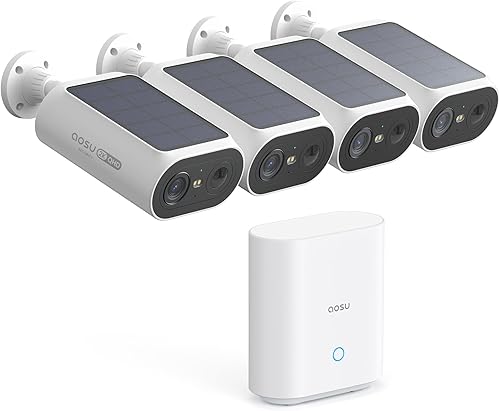 |  |
|---|---|---|---|---|---|---|---|---|---|---|
| Product | 4G LTE Cellular Camera | LIWAN 4G LTE Camera | ProSoCam 6MP Cellular Camera | Tapo C660 Solar Camera | Tapo C465 MagCam | ANRAN Solar Camera | ANNKE Dual-Lens Camera | ieGeek Solar Camera | aosu 4-Cam Kit | Solar Wireless Camera |
| Brand | Tefrio | LIWAN | ProSoCam | Tapo | Tapo | ANRAN | ANNKE | ieGeek | aosu | ZEEPORTE SECURITY |
| Best for | Top Pick | Best for Quick Setup | Best for Wide Areas | Best for 4K Clarity | Best for Magnetic Mounting | Best for Long Distance | Best for Dual Views | Best for Auto Tracking | Best for Property Systems | Best for Stylish Design |
| The listing says | 4G LTE connectivity for off-grid use 5W solar panel for continuous power | 4G cellular connectivity without WiFi Pre-installed SIM card for quick setup | 4G cellular connectivity for remote areas Triple lens for multiple viewing angles | 4K resolution with solar power 4K Ultra-HD resolution | 4K resolution with integrated solar panel 4K 8MP UHD with 18x digital zoom | 24/7 recording with solar self-charging 18x optical zoom and 230FT detection | Dual-lens 4MP HD with 360° coverage 9000mAh battery and 4W solar panel | 24/7 recording with AOV technology 9000mAh battery and 9W solar panel | Integrated solar panel for DIY installation Includes 32GB local storage and dual-band WiFi | 2K FHD resolution with 360° view 2W solar panel and rechargeable battery |
| More information | Buy on Amazon | Buy on Amazon | Buy on Amazon | Buy on Amazon | Buy on Amazon | Buy on Amazon | Buy on Amazon | Buy on Amazon | Buy on Amazon | Buy on Amazon |
1. 4G LTE Cellular Camera
Best for: Remote properties without any Wi-Fi access.
This camera is designed specifically for off-grid use, connecting to 4G networks instead of a router. It includes a pre-installed SIM card that works with major US carriers, which simplifies the setup process for locations like barns or cabins. The 5W solar panel supports continuous power supply to avoid frequent battery concerns.
The 4MP resolution and 360-degree pan-tilt control allow you to see fine details and cover wide areas remotely through the app. It includes person and vehicle detection to reduce false alarms. This camera isn’t for users who have reliable Wi-Fi, as it requires a cellular data subscription for continuous operation.
Pros
- Works without any Wi-Fi connection.
- Includes a built-in solar panel.
- Sharp 4MP video resolution.
Cons
- Requires a monthly data subscription.
- SIM card isn’t removable.
2. LIWAN 4G LTE Cellular Security Cameras
Best for: Quick, easy off-grid setup.
This camera is built to be a simple “power-on-and-go” solution. It connects directly to Verizon, AT&T, or T-Mobile, making it effective for farms, ranches, or remote land where internet cables never reach. The pre-installed SIM card gets you online within minutes, though you must commit to a monthly data plan once the 7-day trial expires.
You can control the view using the UBox app, which supports 350-degree pan and 90-degree tilt. It provides 2K video and color night vision to keep details sharp after dark. Because the camera uses PIR detection to filter out animals, it’s best for monitoring human activity. If you need to capture every second of movement, look elsewhere; this unit is optimized for event-based alerts rather than 24/7 continuous recording.
The built-in solar panel keeps the battery charged, saving you from climbing poles to perform maintenance. To ensure your footage survives, record to a local memory card up to 128GB or use the optional cloud backup. If the camera is damaged, your recordings remain safe in the cloud.
Pros
- Simple, fast cellular setup.
- Durable IP66 weatherproofing.
- Clear 2K video quality.
Cons
- No 24/7 recording mode.
- Subscription needed after trial.
3. ProSoCam 6MP HD 4G Cellular Solar Security Camera
Best for: Wide-area monitoring.
The triple-lens system sets this camera apart by providing multiple angles in one integrated unit. It’s highly flexible, offering 4G cellular for remote sites or a USB-C connection if you have access to a wall outlet. The 6MP resolution ensures high-definition footage, and the infrared LEDs support night vision up to 100 feet.
If you’re monitoring a jobsite or remote property, use the solar panel for continuous power. If you’re placing the unit in a storage shed or an area without sunlight, rely on the internal battery, which lasts up to two weeks depending on your recording mode.
This camera isn’t ideal for users who want a tiny, discreet device. The triple-lens setup creates a larger physical footprint than a standard single-lens camera. If your priority is concealment, this unit will be too bulky for your needs.
Pros
- Unique triple-lens coverage.
- Supports both solar and wired power.
- High 6MP resolution.
Cons
- Requires cellular subscription.
- Larger physical footprint.
4. Tapo 4K Outdoor Pan/Tilt Wireless Security Camera
Best for: High-clarity 4K monitoring.
This model is a strong choice for those who want 4K Ultra-HD resolution to capture fine details like faces or license plates. It uses a 10,000mAh battery backed by a solar panel that only needs 45 minutes of sunlight per day to maintain power. Use the included 13 ft cable to position that panel for optimal exposure.
The auto-tracking feature allows the camera to pan and tilt to follow movement automatically across a 360º range. If you need faster speeds, use the 5 GHz Wi-Fi band; switch to 2.4 GHz if the camera is positioned at a longer distance from your router.
This camera isn’t for users who lack a Wi-Fi network, as it doesn’t support cellular data connections. You must also account for local storage, as it requires a mSD card or a 2.5” HDD via the H500 CentralHub to save your footage.
Pros
- Excellent 4K resolution.
- Smart motion tracking.
- No subscription needed for AI.
Cons
- Requires Wi-Fi network.
- Needs local storage media.
5. Tapo MagCam 4K Outdoor Wireless Security Camera
Best for: Versatile magnetic mounting.
The MagCam features an all-in-one design with an integrated solar panel, making it simple to mount on fences or walls. It captures 4K video and uses on-device AI to detect people and vehicles without needing a cloud subscription. The magnetic base allows for quick adjustments or removal.
If you live in a region with frequent overcast weather, rely on the internal battery, which lasts up to 180 days on a single charge. However, solar charging only functions when temperatures stay above 32°F. If the thermometer drops below this threshold, the panel won’t replenish the battery regardless of sunlight exposure.
For optimal performance, use the 5 GHz band for smooth 4K streaming. If the camera is mounted at the edge of your property, switch to the 2.4 GHz band to maintain a stable connection. While the IP65 rating protects against rain and dust, ensure your installation site stays within the -4°F to 113°F operating range.
Pros
- Simple magnetic installation.
- No monthly subscription fees.
- High 4K resolution.
Cons
- Limited to Wi-Fi areas.
- Solar charging needs temperatures above 32°F.
6. ANRAN 24/7 Recording Solar Security Camera Outdoor
Best for: Long-distance detection.
This camera is built for large properties, featuring a 230-foot detection range that significantly exceeds many standard models. It supports 18X optical zoom, which lets you see distant details without losing image quality. The AOV technology enables 24/7 recording, ensuring you never miss a moment of activity.
If your property layout requires monitoring distant perimeters, use the 18X zoom to identify visitors or vehicles without sacrificing clarity. You must verify your router settings before purchase. This camera isn’t for users with 5GHz-only Wi-Fi, as it strictly requires a 2.4GHz connection to function.
The IP66 rating allows for installation in exposed areas, as it withstands temperatures between -40°F and 140°F. If you experience frequent false alarms from swaying trees or small animals, use the customizable motion detection zones to narrow the focus to high-traffic areas.
Pros
- Impressive 18X optical zoom.
- Very long detection range.
- Supports continuous, round-the-clock recording.
Cons
- Compatible only with standard-range Wi-Fi networks.
- Larger size for mounting.
7. ANNKE 4MP Dual-Lens Solar Security Camera Wireless Outdoor 360° Coverage
Best for: Dual-view coverage.
The dual-lens design provides two simultaneous perspectives. A 70° fixed lens captures a static area, while the second lens offers 350° pan and 90° tilt movement. This combination eliminates blind spots across your property.
If you require automatic subject tracking, this camera isn’t for you. The hardware doesn’t support auto-tracking, so you must manually control the pan and tilt features through the app.
Use the dual PIR sensors to monitor motion within 26 feet. To minimize false alerts, define custom detection zones in the app to focus only on high-traffic areas. You can also record personalized voice warnings to deter unwanted visitors.
The 9000mAh battery and 4W solar panel provide year-round power. For storage, use a local SD card up to 256GB to avoid monthly fees. If you prefer off-site backups, a paid cloud subscription is available.
Pros
- Dual-lens for wider views.
- Dual-band Wi-Fi support.
- Large battery capacity.
Cons
- No auto-tracking feature.
- Subscription needed for cloud.
8. ieGeek Solar Security Cameras Wireless Outdoor
Best for: Proactive monitoring with auto-tracking.
This camera features 2.5K resolution and uses AOV technology to provide 24/7 recording. It captures time-lapse footage during inactivity and switches to full-frame recording when motion occurs. The smart auto-tracking follows subjects up to 100 feet away, covering a 355-degree pan and 120-degree tilt.
If you need to monitor large areas like farms or driveways, use the auto-tracking feature to reduce blind spots. However, if you rely on AI to identify specific objects like packages, pets, or vehicles, note that these recognition features require a paid subscription. Without one, you’ll receive standard motion alerts.
The 9W solar panel reduces the need for frequent manual charging. The system supports local storage via a microSD card up to 128GB. If you encounter setup issues, call their support line at +1 202-656-9955 during weekday business hours.
Pros
- Includes continuous, round-the-clock recording.
- Smart auto-tracking.
- Large 9W solar panel.
Cons
- AI features need subscription.
- Compatible only with standard-range Wi-Fi networks.
9. aosu 2K QHD Solar Security Cameras Wireless Outdoor System
Best for: Full property systems.
If you need to cover multiple spots, this 4-camera kit provides a cohesive system with a central base station. It features “Cam-to-Cam” tracking, which syncs movement across cameras to show an intruder’s full path. The installation is straightforward, requiring only four holes and basic drilling for the integrated solar units.
The system uses dual-band Wi-Fi and includes local 32GB encrypted storage on the base station, which holds up to 60 days of footage without subscription fees. This isn’t for users who only need a single camera, as the kit is designed for comprehensive multi-point coverage of driveways, gates, and garages. If you have a location with at least two hours of daily sunlight, these cameras will operate continuously without manual charging.
Pros
- Integrated 4-camera system.
- Cam-to-cam movement tracking.
- Local storage included.
- 2K resolution with 30ft night vision.
Cons
- Requires central base station.
- Designed for multi-point coverage rather than single-camera use.
10. Solar Wireless Camera
Best for: Classic, stylish design.
This camera is designed to look like an Italian table lamp, making it a unique aesthetic choice for front doors or porches. It offers 2K resolution with 360-degree pan-tilt coverage. The dual storage options include both local SD card recording and free 7-day cloud cycles.
It’s easy to set up and provides real-time two-way talk. Before buying, check your router settings; this device only supports 2.4G Wi-Fi networks and won’t connect to 5G bands.
This camera isn’t for users looking for continuous surveillance or motion tracking. It relies on event-based recording, meaning it only captures footage when the PIR sensor detects movement. If you require continuous surveillance or automated tracking of moving objects, you should look for a different system.
Pros
- Unique, stylish design.
- Free cloud storage cycle.
- 2K resolution.
Cons
- Does not offer continuous, round-the-clock recording.
- No motion tracking.
- Limited to 2.4G Wi-Fi.
How to Choose the Best Solar Camera for Remote Areas
How do I know if I need a cellular camera or a Wi-Fi camera?
You need a cellular camera if your remote area lacks a stable Wi-Fi signal or router access. Cellular cameras use SIM cards and mobile data plans to send alerts and live video to your phone from anywhere with network coverage. Before ordering, check the network coverage maps for the major carriers in your specific area.
If you choose cellular, remember that the SIM card is often locked to the device and can’t be used elsewhere. If your property has reliable internet, a Wi-Fi 6 or dual-band camera is superior for faster, lower-latency streaming. A common mistake is assuming all Wi-Fi cameras support both standard and high-speed bands; many budget models only support the standard range. Check your router’s settings before purchasing to ensure compatibility.
Does the solar panel need direct sunlight all day?
Most solar cameras are designed to work with partial sunlight, but efficiency varies. A high-efficiency panel can often maintain a charge with just a few hours of sun. However, if your location is heavily shaded or experiences long periods of winter darkness, you should prioritize a model with a larger battery capacity, such as a 9000mAh unit, or one that allows for manual charging.
Always check the temperature operating range provided by the manufacturer, as some batteries won’t charge in freezing conditions. For example, some models require temperatures above 32°F for solar charging to function. If you live in an area where temperatures drop below freezing, a camera with a wider operating range—some reaching down to -40°F—is essential to prevent system failure. Ensuring your panel is angled toward the sun is the best way to keep your system running without manual intervention. Use the included extension cables if necessary to position the panel in the most exposed spot possible.
What should I look for in the storage options?
Storage is either local or cloud-based. Local storage, like an SD card, is often the most private and avoids monthly fees, but if the camera is stolen or damaged, you lose the footage. Cloud storage keeps your videos safe on a remote server, which is better for security but usually requires a recurring subscription. Many systems offer a hybrid approach with a local base station. Before you buy, confirm if the camera supports the capacity you need, such as 128GB or 256GB, and check if the basic features are usable without an ongoing subscription.
Be aware that some advanced features, such as AI-based human or vehicle detection, are frequently gated behind a subscription service even if the camera hardware supports them. If you want to avoid monthly bills, look specifically for models that process AI detection locally on the device. Additionally, verify if the camera supports continuous, round-the-clock recording, as many solar-powered models are limited to event-based recording to save battery life. If you require constant monitoring, ensure your chosen model specifically advertises round-the-clock capability.
Frequently Asked Questions
What happens if the cellular signal is weak?
If the cellular signal is weak, the camera may struggle to send live video or push notifications to your phone. The 4G LTE Cellular Camera and LIWAN 4G LTE Camera are designed to operate on major carrier networks, but their performance depends on the tower distance in your specific area.
Can I use these cameras in extreme weather?
Most solar cameras feature weather-resistant housings like IP66 or IP65 ratings to withstand rain, dust, and snow. These designs ensure durability in various outdoor environments. However, extreme cold can impact battery performance, and some models may pause solar charging when temperatures drop below freezing.
What is the first thing that usually goes wrong?
Battery depletion is usually caused by high activity levels or insufficient sunlight. Models like the ieGeek Solar Camera utilize large batteries and efficient panels to manage power, but constant motion tracking can drain energy quickly. Regularly cleaning the solar panel and adjusting motion sensitivity helps maintain consistent power levels.
Is the simplest camera on this list enough?
Simpler cameras are sufficient if your goal is basic monitoring rather than advanced tracking. Models like the Solar Wireless Camera provide essential features such as 2K resolution, pan-tilt control, and two-way talk. However, a more advanced system may be necessary if you require continuous recording or coverage for a large property.
Closing
Selecting the right camera for a remote area comes down to your connectivity needs. For locations completely off the grid, the 4G LTE Cellular Camera stands out for its reliable use of cellular networks, while the LIWAN 4G LTE Camera is a fantastic choice for those who want a quick, hassle-free setup.
If you have a Wi-Fi connection, consider the Tapo C660 Solar Camera for its 4K clarity or the aosu 4-Cam Kit for multi-point property coverage. Once you have identified your primary connection method, look closely at the storage and AI features in the listings to ensure they match your security goals.
If you choose a cellular model, remember that the SIM card is often locked to the device and requires a monthly data subscription to function. Don’t assume your existing phone plan will work; check the specific carrier compatibility for your chosen hardware. If you opt for a solar-powered unit, ensure the mounting location receives at least two hours of direct sunlight daily. Without this, you’ll eventually face power failures regardless of the battery capacity. Start by checking your local signal strength or Wi-Fi range to make your final choice.