
Reliable meat cleavers
A high-quality beef bone cutting knife allows you to process large portions of meat and bone safely and efficiently in your own kitchen.
You’re halfway through preparing a large brisket for a weekend dinner, but your current knife is struggling to break through the thick joints. This is a common frustration for home cooks who handle large cuts of meat, as a standard chef’s knife lacks the necessary weight and edge geometry to handle dense bone. A purpose-built cleaver solves this problem by using mass and durable steel to do the heavy lifting for you. The following picks help you choose the right tool for your specific butchering needs.

- 9-inch heavy cleaver for meat prep
- 6mm-thick blade and 2.9 lb weight
- High-carbon 7Cr17MoV steel with full-tang
- Black G10 handle for secure grip

- 7cr18mov steel with 60 HRC hardness
- Heavy-duty axe shape for big bones
- Triple-riveted pakkawood handle
- Hand-forged with 40 procedures

- 8-inch stainless steel blade
- Versatile for home and professional use
- Integrated hanging hole for storage
- Ergonomic wood handle for control

- 7Cr17MoV stainless steel at 58±2 HRC
- Heavy-duty axe shape for tough bones
- Full tang pear wood handle
- Multipurpose for meat and vegetables
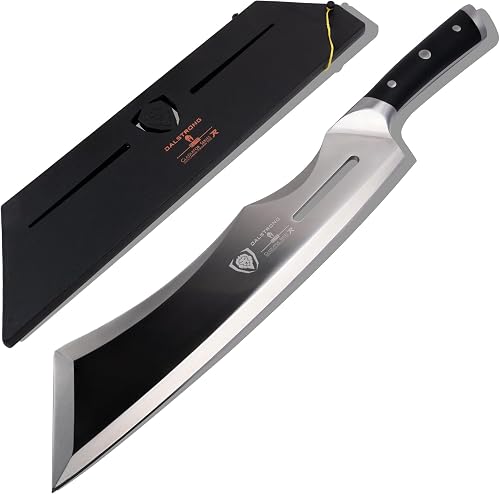
- 14-inch 7Cr17MoV steel at 60 HRC
- 6mm thick, 2.9 lbs weight
- G-10 handle with full-tang construction
- Includes acacia stand and saya sheath

- Cuts through shank, ribs, and bones
- Leverage-based handle for swing force
- High-carbon 7CR17MOV steel at 55 HRC
- Hand-forged with 40 manual procedures

- 710mm extended force arm for leverage
- Cuts pork and goat bones
- 430# SUS body and 30CR13 SUS blade
- 10mm thick blade with non-slip base

- 7 inch multi-purpose meat cleaver
- Japanese high carbon steel at 57+1 HRC
- 15° angle double side sharpened edge
- Ergonomic [FSC certified](https://fsc.org/en/fsc-labels) Pakkawood handle
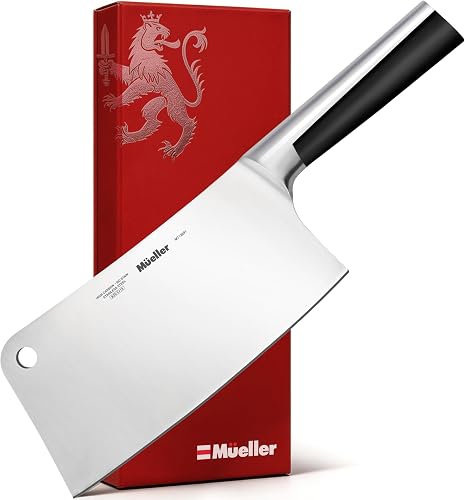
- 7-inch German stainless steel blade
- Seamless full tang stainless steel handle
- Wide blade for chopping and scraping
- Dishwasher safe construction
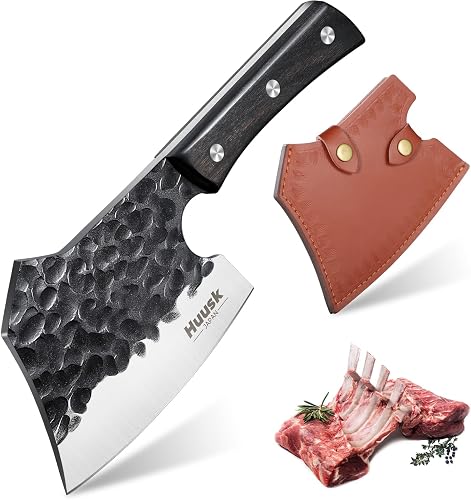
- Handcrafted Japanese steel axe design
- Front-heavy blade for leverage
- Full tang with 6.3-inch ebony handle
- Double-sided for cutting and cracking bones
1. Dalstrong Obliterator 9-Inch Heavy Duty Meat Cleaver with Stand
Best for: Home cooks needing massive weight for heavy-duty meat prep.
The Dalstrong Obliterator Cleaver is designed with a 6mm-thick blade and a weight of 2.9 lbs to provide significant chopping momentum. Its high-carbon 7Cr17MoV steel and full-tang construction create a tool that feels substantial in the hand, intended specifically for portioning meat and preparing poultry.
Using this cleaver feels like swinging a specialized tool rather than a kitchen knife. The black G10 handle offers a thick grip, which helps you position the heavy blade accurately during long prep sessions. It isn’t suitable for those who prefer a lightweight knife, as its heavy build is the primary way it achieves its cutting power.
Pros
- Substantial 2.9 lb weight for momentum
- Thick 6mm blade for durability
- Full-tang construction for added strength
- Includes acacia wood display stand
- Fitted sheath with retaining pin
Cons
- Very heavy for some users
- Not designed for delicate tasks
Why this one: This cleaver is ideal for someone who wants a dedicated tool for breaking down large cuts of meat and bone. If you prioritize weight and power over agility, this is your best option. Those looking for a nimble knife for vegetables or fine dicing should consider a different, lighter tool.
2. Kitory Massive Bone Cleaver
Best for: Butchers and cooks requiring an axe-style design for big bones.
The Kitory Massive Bone Cleaver features a unique axe shape forged from 7Cr18MoV steel. It’s built to be heavier than a standard kitchen knife, using traditional quenching processes to improve the steel’s hardness and durability for breaking through large, tough bones. With a hardness rating of 60 HRC, this blade is designed to withstand the high-impact stress of chopping through dense material.
This knife is built for force, not finesse. The pakkawood handle is triple-riveted to ensure stability, and the tapered blade is designed to reduce surface resistance, which helps when moving through thick pieces of meat. It isn’t intended for fine kitchen work, as its primary purpose is heavy-duty bone breaking. If you attempt delicate tasks like dicing vegetables or mincing herbs, the blade’s significant weight and thick geometry will make the work cumbersome and imprecise.
Pros
- Axe shape for maximum force
- Forged 7Cr18MoV steel construction
- Ergonomic triple-riveted pakkawood handle
- High hardness rating of 60 HRC
- Corrosion-resistant blade finish
Cons
- Not suitable for fine dicing
- Requires significant arm strength
Why this one: If you frequently deal with large beef bones or frozen meat, this axe-style cleaver provides the necessary robustness. It’s a specialized tool for heavy-duty tasks. If your needs are mostly for slicing or lighter chopping, this knife will likely feel like overkill for your routine. Reserve this tool strictly for high-impact butchery to maintain the integrity of your finer, lighter kitchen cutlery.
3. Juvale Meat Cleaver
Best for: Home cooks looking for an ergonomic and versatile butcher knife.
The Juvale Meat Cleaver is an 8-inch stainless steel tool built to handle both meat cleaving and vegetable preparation. Its design focuses on versatility, making it a reliable addition to a collection of kitchen knives for those who don’t want to switch tools frequently.
The ergonomic wood handle is designed for comfort during extended use, which helps reduce hand fatigue. It includes a built-in hanging hole, which is a practical feature for keeping the knife accessible in a busy kitchen or an outdoor cooking setup. It’s a sturdy tool, but it lacks the extreme weight of dedicated bone-breaking axes.
Pros
- Versatile for meat and vegetables
- Ergonomic wood handle for comfort
- Integrated hanging hole for storage
- Durable stainless steel construction
- Suitable for home and professional use
Cons
- Lacks extreme weight for large bones
- Not specialized for heavy-duty breaking
Why this one: This is a solid choice for the versatile cook who wants one tool for a variety of prep tasks. It’s best for those who need a balance between chopping power and daily usability. If you have a specific need to chop dense, large bones, you should look at heavier, axe-style alternatives.
4. BLADESMITH Meat Cleaver Butcher Axe Bone Chopper Heavy Duty
Best for: Those who want a bone breaker that performs well outdoors.
The BLADESMITH Bone Chopper is a 6.3-inch knife crafted from 7Cr17MoV carbon stainless steel. It features an axe shape and a thick blade designed to withstand the impact of chopping through tough bones without causing jarring vibration in the hand.
The pear wood handle is a standout feature, as it is designed to absorb oils. This makes it a practical choice for butchers or hunters who work in environments where slippage is a concern. It’s a multipurpose tool, but its thick spine and heavy design make it most effective for bone-in work.
Pros
- 7Cr17MoV steel for high strength
- Pear wood handle absorbs oils
- Axe shape reduces jarring impact
- Multipurpose spine for mashing
- Suitable for outdoor hunting use
Cons
- Shorter 6.3-inch blade length
- Not for fine precision work
Why this one: This cleaver is a great pick for someone who needs a rugged tool that works both in the kitchen and in outdoor settings. Its handle material is particularly useful for those who work with greasy or wet meat. If you need a longer blade for large roasts, you may find this model a bit short.
5. Dalstrong Annihilator 14″ Meat Cleaver
Best for: Pros who need a long, heavy blade for full-session prep.
The Dalstrong Annihilator Cleaver is a 14-inch tool made from high-carbon 7Cr17MoV steel. With a 6mm thickness and 2.9 lbs of mass, it’s designed for significant butchering tasks, such as breaking down a quarter of beef or sectioning a pork shoulder.
The G10 handle is military-grade and designed for a pinch grip, which allows for better control during long prep sessions. It’s an NSF-certified tool, meaning it meets professional standards for kitchen equipment. The blade’s mass does the work, so the user only needs to guide the knife rather than apply excessive force.
Pros
- Large 14-inch blade for reach
- Heavy 2.9 lb mass for power
- Military-grade G10 handle
- NSF certified for professional use
- Includes display stand and sheath
Cons
- Large size requires storage space
Why this one: This is a high-performance tool for the serious home butcher or professional. Its length and weight make it more effective for breaking down large carcasses than the lighter knives in this guide. If you only have a small kitchen or rarely process whole primal cuts, this knife will take up unnecessary space.
6. Big Bones Cleaver
Best for: Professional-grade durability for repetitive, heavy tasks.
The Big Bones Cleaver by ZENG JIA DAO is a professional-grade tool engineered to power through oxtail, ribs, and lamb legs. Its design features a slightly longer handle that acts as a lever, which helps multiply your force while protecting your wrist during heavy, repetitive chopping.
The blade is forged from 7CR17MOV steel and hardened to 55 HRC, providing a balance between edge retention and impact resistance. The cold-forging process increases the density of the metal, aiming for a longer lifespan than mass-produced alternatives. It’s strictly optimized for bones and frozen foods, not for finer tasks like dicing.
Pros
- Lever-action handle design
- Cold-forged steel for density
- Professional-grade construction
- Durable pear wood handle
- Optimized for bone-in work
Cons
- Not for dicing or slicing
- Limited to heavy-duty tasks
Why this one: This cleaver is perfect for someone who does a lot of butchering and wants a professional-grade tool that reduces wrist strain. It’s a specialized, durable investment. If you’re looking for a multipurpose knife that can also handle vegetables and fine herbs, this isn’t the right choice.
7. Moongiantgo Manual Meat Bone Cutter Rib Slicer with 16 Inch
Best for: Someone who prefers a manual machine over a handheld knife.
The Moongiantgo Bone Cutter is a manual machine designed to cut bones using a 28-inch extended handle for leverage. It’s a stationary tool, meaning it stays on your counter while you pull the lever to slice through ribs and chine bones.
It’s built from stainless steel and features a 10mm thick blade, which is much thicker than a standard handheld cleaver. It comes with safety accessories, including cut-resistant gloves, to ensure you can operate the machine safely. Note that it isn’t intended for frozen meat or the hardest beef bones like the femur.
Pros
- Lever mechanism saves labor
- Thick 10mm stainless steel blade
- Includes safety gloves
- Stable balance foot design
- Large 200x386mm cutting board
Cons
- Not for frozen meat
- Stationary, takes up counter space
Why this one: This is the best choice for anyone who finds handheld cleavers difficult to control or physically demanding. It removes the need for high-impact chopping. If you have very limited counter space or need to cut through extremely hard beef femurs, this machine may not meet your requirements.
8. imarku Cleaver Knife 7 Inch
Best for: A versatile, Japanese-style cleaver for all-around kitchen use.
The imarku Cleaver Knife is a 7-inch tool forged from Japanese high-carbon stainless steel. It’s designed as a multipurpose essential, handling tasks from mincing and slicing to boning and chopping vegetables.
The blade is hand-sharpened on both sides, providing a balance between sharpness and durability. Because the blade thickness is 2.4mm, it cuts through tough food with minimal effort. The wide surface also keeps your fingers safely away from the cutting area.
The pakkawood handle is ergonomic and suitable for both left-handed and right-handed users. This design reduces hand fatigue during long prep sessions. If your hand feels cramped after ten minutes of chopping, adjust your grip; the handle is shaped to allow for high maneuverability and a secure hold.
While it’s strong enough for daily tasks, it’s thinner than a dedicated bone-breaking axe. Use this knife for meat, fruits, and vegetables. If you’re preparing thick, dense bones, use a heavier, specialized cleaver instead to avoid damaging the edge.
Pros
- Versatile 7-inch blade
- 57+1 HRC hardness for edge retention
- Double-sided 15-degree edge
- Ergonomic pakkawood handle
- Suitable for left and right hands
Cons
- Thinner blade than heavy-duty axes
- Not for dense, large bones
Why this one: This cleaver is excellent for the cook who wants a sharp knife for daily meal prep. It’s an ideal middle ground for someone who doesn’t need to crack through heavy beef joints.
9. Mueller 7-Inch Meat Cleaver Butcher Knife
Best for: Cooks who want a dishwasher-safe, stainless steel handle design.
The Mueller Meat Cleaver is a 7-inch tool made from German high-carbon steel, precision-forged and sharpened to an 18-degree edge. It’s designed to be a multi-purpose knife, capable of chopping poultry and ribs while also handling fine scoring and boning tasks with its tip.
A key feature is the seamless stainless steel handle, which is designed for hygiene and durability. It’s dishwasher safe, although the manufacturer recommends hand washing to keep the edge sharp longer. It provides a well-balanced feel that works for both professional and home kitchens.
Pros
- Seamless stainless steel handle
- Dishwasher safe for easy cleanup
- 18-degree edge for durability
- Multi-purpose tip for detail work
- Resists corrosion and discoloration
Cons
- Requires maintenance for edge retention
- Lacks the mass of heavy axes
Why this one: This is a great pick for the cook who values hygiene and easy cleaning above all else. Its stainless steel construction is very practical for busy kitchens. If you’re specifically looking for a heavy-duty bone-breaking tool, you might find the weight of this knife insufficient.
Use this tool if you need a single blade to handle three distinct kitchen tasks: chopping, slicing, and detail work like scoring. If you find yourself switching between a heavy cleaver and a delicate paring knife, this blade replaces both. However, if you’re breaking down large, dense bones, remember that weight provides mechanical advantage. If the knife feels too light in your hand, you’re likely using it for tasks better suited to a specialized, heavier butcher’s axe.
10. Huusk Meat Cleaver Knife Heavy Duty Bone Chopper
Best for: Someone wanting a hand-forged, axe-like tool with a unique design.
The Huusk Meat Cleaver is hand-forged with a 25-degree V-shaped blade, designed to combine axe-like chopping power with kitchen knife precision. It undergoes both 1050°C quenching and -190°C cryogenic treatment to reach a hardness of 60-62 HRC. This process helps the blade resist chipping while splitting large bones.
The handle is made of natural ebony and is forged as one piece with the blade for maximum durability. Three rivets reinforce this full-tang construction. It includes a leather sheath for storage, making it portable for camping or outdoor cooking. The back of the blade is blunt, meant for cracking bones, while the front is for cutting through frozen foods, pork ribs, or even wood.
Pros
- Hand-forged with cryogenic treatment
- The blade and handle are forged from a single continuous piece of steel for maximum durability.
- Durable natural ebony handle
- Includes portable leather sheath
- Blunt spine for cracking bones
Cons
- Higher maintenance due to forging
- Not for fine dicing
Why this one: This is for the cook who appreciates artisanal craftsmanship and wants a tool that can handle both kitchen work and outdoor trips. Its front-heavy design uses leverage to reduce wrist effort during heavy tasks. If your primary goal is delicate vegetable prep, choose a lighter, thinner blade instead. This cleaver is built specifically for high-impact force. If you prefer a simpler, mass-produced stainless steel knife, this might feel too complex. Use the front edge for clean cuts and the blunt spine for heavy-duty bone breaking.
How to Choose a Beef Bone Cutting Knife
Choosing the right cleaver depends entirely on your specific cooking habits and the types of meat you process. Prioritize the weight and design that matches your most frequent tasks rather than just looking at the number of features listed.
If you’re breaking down whole beef, splitting joints, or cracking large bones, you need a heavy-duty axe-style cleaver. These tools rely on mass—often 2.9 lbs or more—to provide the necessary chopping momentum. If your tasks involve lighter poultry, brisket, or vegetable prep, a standard 7- to 8-inch blade provides better control and maneuverability.
For the most demanding bone-in work, consider a manual bone-cutting machine. These leverage-based tools can handle ribs and chine bones, but be aware of their limits; most can’t process beef femurs or frozen meat.
Check your storage before buying. Some heavy-duty models include acacia display stands or fitted sheaths, which are essential if you lack drawer space. If your priority is ease of maintenance, look for stainless steel handles, as these are often dishwasher safe. Conversely, wooden handles like pear or ebony offer superior grip and oil absorption, but require hand washing to preserve their integrity.
Frequently Asked Questions
Is it safe to put my meat cleaver in the dishwasher?
Most high-quality cleavers, especially those with wooden handles, should be hand washed to maintain the integrity of the blade and handle. While some stainless steel models are labeled as dishwasher safe, high-heat cycles can dull the edge and cause the handle material to degrade. Hand washing is always the safest practice for long-term sharpness.
How do I keep my cleaver sharp after chopping bones?
Bone-in work is hard on any blade, so regular maintenance with a honing rod or a sharpening stone is necessary to keep the edge effective. You should align the edge after every use to prevent it from rolling or dulling prematurely. If you notice chips, you may need a coarser stone to restore the edge geometry.
Can I use a regular chef’s knife for bones instead?
Using a regular chef’s knife on bones is dangerous and likely to ruin the blade. Chef’s knives are designed with thinner, more delicate edges for slicing and dicing, and they lack the weight required to split bone safely. A dedicated cleaver uses a thicker spine and a more robust edge angle to handle the impact of bone-breaking without failing.
What is the advantage of a full-tang construction?
A full-tang knife, where the metal of the blade extends through the entire length of the handle, provides superior balance and durability. This design ensures that the handle won’t snap off under the high pressure of chopping through dense joints or thick bones. It’s a critical feature for any tool intended for heavy-duty kitchen work.
Are these heavy-duty cleavers worth the space they take up?
If you frequently prepare meat from scratch or process your own cuts, a heavy-duty cleaver is an essential tool that saves you time and effort. While they do occupy more space than a standard knife, their ability to handle tasks that would otherwise require a saw or multiple tools makes them a worthwhile investment for the dedicated cook.
Do I need special training to use a bone cleaver safely?
You don’t need formal training, but you must practice safe handling techniques, such as keeping your fingers away from the cutting path. These tools rely on weight and force, so it is important to maintain a firm grip and use a stable, heavy-duty cutting board.
The Verdict for Most People
For those seeking a versatile tool, the imarku 7-inch cleaver is the superior choice. Its 2.4mm blade thickness and ergonomic pakkawood handle offer the precision needed for daily tasks like slicing, mincing, and boning, without the excessive weight that causes fatigue. It’s a versatile, manageable tool for standard kitchen prep.
If your work involves splitting heavy joints, quartering poultry, or processing large primal cuts, you need a dedicated heavy-duty cleaver like the Dalstrong Annihilator. Its 2.9 lb weight and 6mm-thick blade use mass to drive through tough bone-in projects that would chip or strain a lighter knife.
Know your threshold: if you’re prepping vegetables and boneless meat, a lighter, thinner blade is safer and more efficient. If you’re regularly breaking down beef shanks, ribs, or frozen items, you must move to a heavy-duty axe-style tool. Using a lightweight knife for bone-breaking risks damage to the blade, while using a massive cleaver for fine dicing is clumsy and impractical.