
Selecting an above ground pool heat pump requires balancing your pool volume against the unit heating capacity and local climate. While some models prioritize smart app connectivity and ease of installation, others focus on inverter technology to lower long-term energy consumption. Your main choice rests on whether you need a simple plug-and-play solution for a small pool or a hardwired, high-capacity system for year-round temperature control.
Best overall: 40,000 BTU Pool Heater, which balances a high-pressure compressor with a 6.2 COP to heat pools up to 12,000 gallons efficiently while offering both heating and cooling modes for year-round use.
Most efficient: TURBRO 50,000 BTU Inverter, which uses full DC inverter technology and a 16.2 COP rating for pool setups up to 21,100 gallons.
Easiest installation: Plug and Play Heat Pump, which allows for a straightforward, tool-free setup with its 110-120V connection, making it an ideal choice for owners of smaller pools up to 6,500 gallons.
This guide is for pool owners looking to extend their swimming season by selecting a heat pump that matches their pool size and electrical setup.
How We Picked
We compared 16 different pool heat pump listings to identify models that provide clear, reliable technical specifications. To earn a place in this article, each product had to state its heating capacity, pool volume compatibility, and electrical requirements. We excluded models that lacked essential information regarding installation requirements or power needs.
All 10 products side by side — scroll sideways to see every column.
| Top Pick | Best for Large Pools | Best for Spas | Best for Extended Seasons | Best for Quiet Operation | Best for Saltwater Pools | Best for Small Pools | ||||
| Preview |  |  | 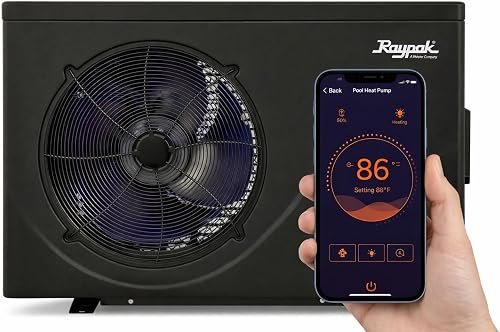 |  |  |  |  |  | 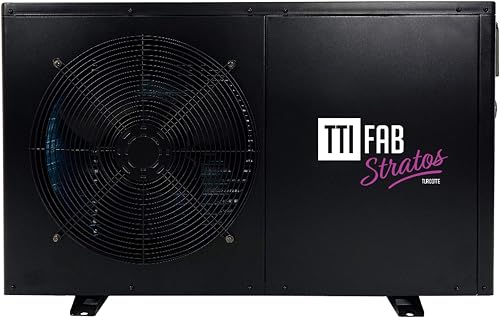 |  |
|---|---|---|---|---|---|---|---|---|---|---|
| Product | 40,000 BTU Pool Heater | TURBRO 50,000 BTU Inverter | Raypak Crosswind 40i | GRAT 75,000 BTU Inverter | Albott 40,000 BTU Heater | Plug and Play Heat Pump | TURBRO 18,000 BTU Pump | XtremepowerUS 14,800 BTU Heater | TTI FAB Stratus | POOLTOHOT Pool Heater |
| Brand | Varpoolfaye | TURBRO | Not stated | GRAT | Albott | Elejourney | TURBRO | XtremepowerUS | Harris Pool Products | POOLTOHOT |
| Best for | Best Overall | Best for Large Pools | Best for Spas | Best for Extended Seasons | Best for Quiet Operation | — | Best for Saltwater Pools | Best for Small Pools | — | — |
| The listing says | 40000 BTU output for pools up to 12000 gallons Heating 59°F-104°F and cooling 45°F-86°F modes | Full DC inverter compressor for stable temperatures 75000 BTU heating capacity with 16.2 COP | Heating and cooling for pool and spa Spiral titanium heat exchanger | Heating and cooling for extended swim season Full inverter technology adjusts compressor output | Heating range 44–104℉ 40000 BTU capacity for pools up to 12000 gallons | Heating 59–104°F and cooling 59–83°F modes 18000 BTU for pools up to 6500 gallons | Heating 59-104°F and cooling 46-82°F 18000 BTU output with 5.5 COP | Operates at 40ºF to 105 ºF outdoor temperatures 5.5 COP energy efficiency | Rotary compressor for lower temperatures Compatible with all circulation and sanitization systems | Titanium heat exchanger with Japanese compressor Heating 47–109°F and cooling 47–83°F |
| More information | Check Price on Amazon | Check Price on Amazon | Check Price on Amazon | Check Price on Amazon | Check Price on Amazon | Check Price on Amazon | Check Price on Amazon | Check Price on Amazon | Check Price on Amazon | Check Price on Amazon |
1. 40,000 BTU Pool Heater
Best for: Medium-sized residential pools up to 12,000 gallons.
This heater features a titanium heat exchanger for freshwater or saltwater pools. It uses a high-pressure compressor to achieve a 6.2 COP, helping maintain water temperatures between 59°F and 104°F. The included WiFi app allows you to schedule heating or cooling, which is helpful if you want the pool ready by the time you get home.
Because this unit extracts heat from the ambient air rather than generating it directly, it operates much more efficiently than traditional gas or electric heaters. It maintains this performance while keeping noise levels as low as 53 dB, ensuring your backyard remains quiet during operation.
The unit is designed with water-electric separation for safety, but it does require a 220v connection for operation. If you have a very small, portable pool, the Plug and Play Heat Pump might be a better fit, as it runs on standard 110-120V power. This model isn’t intended for users who lack access to a 220v power source or a professional installer. To maximize your efficiency, always pair this heater with a pool cover to retain the heat you have generated.
Pros
- Dual heating and cooling modes.
- WiFi app for remote control.
- Titanium heat exchanger resists corrosion.
Cons
- Requires professional 220v installation.
- This unit is not designed to accommodate larger backyard swimming pools.
2. TURBRO 50,000 BTU Inverter
Best for: Larger pools needing consistent, energy-efficient temperature control.
This model uses full DC inverter technology to adjust its heating power based on the ambient air temperature and water flow. By harnessing heat from the air, it achieves a high COP of up to 16.2. It features a titanium heat exchanger for freshwater or saltwater pools and an intuitive control panel for setting timers.
The unit is built for pools up to 21,100 gallons, meaning it’s quite powerful for standard above-ground setups. Because it utilizes a titanium heat exchanger, the system is designed for use in both freshwater and saltwater pools. This makes it a durable choice for owners who want to extend their swimming season into the cooler spring or fall months.
If you have a smaller pool, the TURBRO 18,000 BTU Pump is a more compact alternative that avoids over-equipping your system. This unit isn’t recommended for inflatable pools due to the high water pressure requirements. Always use a pool cover during colder weather to help the unit retain heat and reach your target temperature faster.
Pros
- High 16.2 COP efficiency rating.
- Suitable for seawater environments.
- Built-in safety sensors.
Cons
- Professional hardwired installation required.
- Not suitable for inflatable pools.
3. Raypak Crosswind 40i 33
Best for: Users who prioritize quiet operation and smart features.
This heat pump uses a spiral titanium heat exchanger and an inverter compressor combined with a low-speed fan motor. This design focus results in whisper-quiet operation, making it a good choice if your pool is located close to your house or patio. It provides both heating and cooling capabilities and includes integrated WiFi for digital control.
Because the unit relies on an inverter compressor, it adjusts its performance to maintain your desired temperature rather than cycling on and off. This constant, low-speed adjustment is what keeps the noise levels low while managing energy consumption. You can monitor and adjust these settings remotely through the WiFi interface, which is ideal if you want to prep your pool before heading outside.
The unit is designed for pools up to 9,000 gallons. If you need to heat a larger volume, the GRAT 75,000 BTU Inverter offers a higher capacity. This model isn’t for people who prefer manual, non-digital interfaces, as it relies on an LCD digital control display.
Pros
- Very quiet fan operation.
- Dual heating and cooling functions.
- WiFi connectivity included.
Cons
- Limited to 9,000-gallon pool capacity.
- Requires 208/230V hardwired connection.
4. GRAT 75,000 BTU Inverter
Best for: Large residential pools up to 21,000 gallons.
This heat pump uses full inverter technology to automatically adjust its compressor output based on the actual heating demand of the pool. Unlike traditional gas heaters, this system fluctuates its power to maintain stable water temperatures while minimizing energy consumption.
It includes both WiFi and Bluetooth connectivity, allowing for remote monitoring and adjustments directly from your smartphone. You can ensure your water is at the perfect temperature before you even step outside.
The unit is designed for residential backyards and emphasizes quiet operation, which is useful for early morning or evening swims. If you have a small pool, this unit provides more power than you need, and you might prefer the XtremepowerUS 14,800 BTU Heater. This product isn’t for those who want a simple plug-in unit, as its high capacity necessitates a robust power setup and professional installation.
Pros
- High 75,000 BTU output.
- WiFi and Bluetooth control.
- Inverter technology saves energy.
Cons
- Oversized for small pools.
- Requires professional installation.
5. Albott 40,000 BTU Heater
Best for: Maintaining stable temperatures in pools up to 12,000 gallons.
The Albott unit features an advanced inverter system with a COP of up to 12, which aids in efficient heating across changing seasons. It offers a wide temperature range of 44–104℉ and includes an intelligent defrost system to keep the unit running in cooler weather. You can manage settings via a mobile app, which is convenient for adjusting runtime or modes. This remote functionality ensures you can monitor your pool’s comfort from anywhere.
The unit is designed for easy integration with standard systems and includes shock absorber pads to reduce vibration. Operating at roughly 36 decibels, it maintains a quiet environment for your backyard. If you require a unit for a very small pool, the TURBRO 18,000 BTU Pump is an alternative option. This heater isn’t for users who can’t accommodate a 220V power supply.
Pros
- High COP of 12.
- Intelligent auto-defrost system.
- Mobile app for remote control.
- Quiet 36-decibel operation.
Cons
- Requires a 220V power supply.
- Not for pools over 12,000 gallons.
6. Plug and Play Heat Pump
Best for: Quick, hassle-free installation for small above-ground pools.
This model is built for pools up to 6,500 gallons and runs on a standard 110-120V outlet. Its primary advantage is the plug-and-play design, which eliminates the need for professional electrical work. It features a titanium heat exchanger for saltwater compatibility and provides both heating and cooling modes. You can set the water anywhere from 59 to 104°F for heating, or down to 59°F for cooling.
The unit operates at 38 dB, which is quiet enough to maintain a peaceful backyard atmosphere. Because it utilizes advanced heat pump technology with a COP of 5.5, it transfers heat far more efficiently than traditional electric heaters.
If you have a larger pool, this unit won’t provide sufficient power, and you should look at the 40,000 BTU Pool Heater instead. This model isn’t for anyone who needs to heat a pool larger than 6,500 gallons. The built-in automatic defrost system ensures the unit keeps running even when the weather turns cold.
Pros
- No professional installation needed.
- Standard 110-120V plug.
- Quiet 38 dB operation.
Cons
- Limited to 6,500-gallon pools.
- Lower BTU output than hardwired units.
7. TURBRO 18,000 BTU Pump
Best for: Compact and portable heating for small pools or spas.
This 18,000 BTU pump is designed for pools up to 6,000 gallons and connects directly to standard 110-120V power. It features a titanium heat exchanger and a four-way valve that lets you switch between heating and cooling easily. Because it’s compact, it’s a good fit for inflatable pools, small frame pools, or spas.
The unit utilizes air-source technology to achieve a 5.5 COP rating. While it’s highly efficient, you should expect the process of reaching your target temperature to take a few days rather than providing instant results. Using a pool cover or windbreak will significantly improve its performance.
Setup is straightforward as it connects to flexible hoses without needing professional help. If you have a standard rectangular pool over 12×20 ft, this unit may be undersized. This unit isn’t for owners of pools larger than 6,000 gallons.
Pros
- Simple plug-in installation.
- Compact and portable size.
- Compatible with freshwater or saltwater pools.
Cons
- Not for pools over 6,000 gallons.
- Requires separate adapter for PVC pipes.
8. XtremepowerUS Pool Heat Pump 14
Best for: Small above-ground pools up to 4,000 gallons.
This heater is designed specifically for small above-ground pools and operates on a standard 115V power supply. Its plug-and-play installation means you can hook it up using quick connectors without hiring a plumber or electrician. It features a titanium heat exchanger that resists corrosion from pool chemicals, ensuring the internal components remain durable despite constant water exposure.
The unit maintains a consistent temperature automatically, meaning you don’t need to adjust settings once it’s running. By absorbing energy from the air, it achieves a COP of 5.5, which is more energy-efficient than traditional gas or electric systems.
Because this heater relies on ambient air, it functions best when outdoor temperatures remain between 40ºF and 105ºF. This makes it an ideal tool for extending your swimming season by a few months. This model isn’t intended for pools larger than 4,000 gallons.
Pros
- No professional installation required.
- Corrosion-resistant titanium exchanger.
- Simple plug-and-play setup.
Cons
- Limited to 4,000-gallon pools.
- Lower capacity than fixed-installation heaters.
9. TTI FAB Stratus
Best for: Durability and consistent performance in medium above-ground pools.
The Stratus series is built with a rotary compressor and an injection system calibrated for lower outdoor temperatures. This specific engineering allows the unit to maintain heat output even when the air turns cool. It works with any circulation pump or sanitization system, making it a flexible choice if you already have specific equipment installed.
The design focuses on increasing efficiency and reducing electricity consumption. Because the system is calibrated for these conditions, it performs reliably where standard pumps might struggle. It’s available in four sizes, ranging from the base model for 18′ round pools up to the 100,000 BTU model for 28′ round pools.
If you prefer a unit with smart WiFi control, the 40,000 BTU Pool Heater is a better alternative. This model isn’t for users who want an easy DIY plug-in solution, as it’s a more industrial-style build that requires professional setup.
Pros
- Optimized for lower temperatures.
- Compatible with most pool systems.
- Durable rotary compressor.
Cons
- No smart app control mentioned.
- Requires professional installation.
10. POOLTOHOT Pool Heater
Best for: Versatile heating and cooling for a wide range of pool sizes.
This unit uses a high-performance compressor from Japan and a titanium heat exchanger to provide stable performance. It features full DC variable frequency technology, which contributes to a high COP of 15.8 and helps save on energy costs. The built-in WiFi allows you to control the temperature and schedules from your phone.
The unit is designed to handle pools up to 9,000 gallons and includes an auto-defrost feature for cold weather. To get the most efficiency, run the unit 24 hours in advance while using a pool cover. This combination minimizes heat loss and stabilizes your water temperature much faster. If you have a very large pool, the GRAT 75,000 BTU Inverter is a more powerful option. This model isn’t for people who want to avoid WiFi-enabled appliances.
Pros
- High COP of 15.8.
- WiFi app control included.
- Reliable auto-defrost system.
- Whisper-quiet 50dB operation.
Cons
- Requires 220V hardwired connection.
- Not for pools exceeding 9,000 gallons.
- Must be used with a cover for maximum efficiency.
How to Choose in Sixty Seconds
Match Capacity to Pool Volume
The most critical step is ensuring the unit’s BTU output can handle your pool’s volume. A heater that’s too small for your pool will run constantly without reaching your desired temperature, leading to high energy costs. Always check the manufacturer’s maximum gallon rating. If your pool is near the limit, choose a slightly more powerful unit to account for wind and heat loss. For efficient operation, the U.S. Department of Energy notes that proper sizing is essential for heat pump efficiency. Avoid selecting a unit based on the smallest size if you live in a cooler climate, as you’ll need more power to overcome the ambient air temperature.
Evaluate Electrical Requirements
Before ordering, confirm if you need a 110-120V plug-in unit or a 220-240V hardwired system. Plug-and-play models are convenient for small pools, but they lack the power to heat larger volumes quickly. Hardwired units require a certified electrician to install, which adds to the setup process but provides the power necessary for larger pools. Check your backyard’s electrical access to see if you have the required voltage available. Confirm the specific voltage your chosen heater requires before you finalize your purchase.
Consider Maintenance Features
Look for features that protect your investment, such as titanium heat exchangers, which are essential for saltwater compatibility. Additionally, features like automatic defrosting are vital if you plan to swim during cooler spring or fall days, as they prevent ice buildup on the coils. WiFi control is a significant convenience, allowing you to monitor the pool temperature or set schedules from your smartphone. If you live in an area with high chemical usage, ensure the housing and internal parts are rated for corrosion resistance. A unit with built-in fault sensors is also safer, as it will shut down automatically if it detects an issue.
Related guides
- 10 Best Portable Diesel Heater for Efficient & Reliable Heating Solutions
- What is the Best Ceramic Space Heater for Efficient Home Heating?
- 10 Best Space Heater Affordable Options for Cozy and Efficient Heating
Frequently Asked Questions
Do I need a professional to install my pool heat pump?
Whether you need a professional depends on the unit’s power requirements. Plug-and-play models connect to standard outlets for DIY setup, while high-capacity units like the TURBRO 50,000 BTU Inverter require a hardwired 220-240V connection. For these, a certified electrician is necessary to ensure the installation meets safety standards.
Can I use a heat pump in a saltwater pool?
Yes, you can use a heat pump in a saltwater pool if it features a titanium heat exchanger. Many modern units, including our top inverter and plug-and-play models, use titanium to resist corrosion from salt and pool chemicals. Always confirm the heat exchanger material in the product manual before purchasing.
Will a pool heat pump work in cold weather?
Heat pumps rely on ambient air to heat your pool, so efficiency decreases as temperatures drop. While some models include auto-defrost to maintain performance, they are most efficient when outdoor temperatures are 60°F or above. Using a pool cover helps retain heat in cooler conditions.
How do I maintain my heat pump for the best performance?
Maintaining your heat pump involves keeping the area around the unit clear of debris to ensure proper airflow. Use a pool cover when the pump is idle to improve heating efficiency and monitor water flow to stay within the manufacturer’s recommended GPM range for optimal performance.
Closing
The 40,000 BTU Pool Heater stands out as the best overall choice for most residential above-ground pools due to its balanced heating capacity and useful smart features. For those seeking maximum efficiency and lower long-term operating costs, the TURBRO 50,000 BTU Inverter is an excellent alternative that handles larger volumes with ease.
To get started, measure your pool’s total volume in gallons and check your available electrical outlet voltage to ensure compatibility with your chosen unit. Remember that heat pumps aren’t instant; they perform best when you run them early and use a pool cover to retain heat.
Once you have these two figures, you can confidently select the model that best fits your backyard needs. Proper setup, including using a cover and allowing for the initial time required to reach your target temperature, will ensure you start enjoying a warmer, more comfortable swimming season throughout the year.