
Choosing the right tool for cleaning bones depends on whether you need a heavy cleaver to chop through dense joints or a flexible, pointed blade to separate meat from the bone with care. These picks vary by blade weight, handle material, and intended force.
Best overall: Juvale Meat Cleaver, which provides a versatile 8-inch stainless steel blade suitable for both heavy-duty bone cleaving and general kitchen preparation, featuring a convenient hanging hole for easy storage.
Best for precision: Victorinox Fibrox Pro Boning, which offers a sharp, curved design that excels at delicate deboning tasks while remaining lightweight and dishwasher safe for simple, everyday kitchen maintenance.
Best for heavy duty: Big Bones Cleaver, which utilizes a long handle as a lever to multiply swing force, making it the most effective choice for powering through thick bones like lamb legs or ribs.
The rest of this guide helps you match these specific designs to your own butchery needs.
How We Picked
We compared 48 different Amazon listings to identify tools capable of handling bone-related tasks. A product had to clearly state its material composition, blade length, and intended use—such as chopping bones or fine deboning—to be considered for this list. We removed any models that lacked clear specifications regarding their construction or ergonomic features. Our focus remained on the manufacturer’s stated performance capabilities, ensuring each recommendation is grounded in the provided data.
All 10 products side by side — scroll sideways to see every column.
| Top Pick | Best for Deboning | Best for Frequent Use | Best for Trimming | Best for Large Cuts | Best for Field Processing | Best Breaking Knife | Best for Bone Chopping | Best for Vegetables | ||
| Preview |  |  | 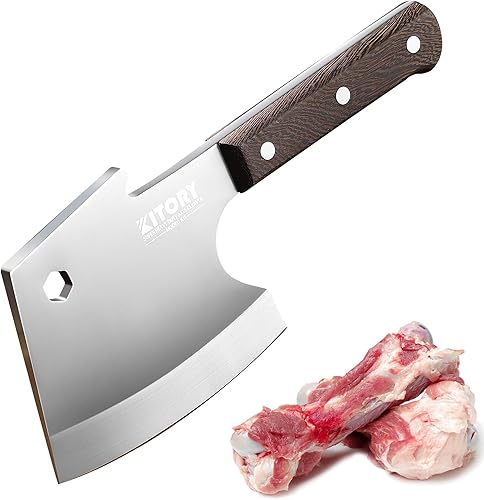 |  |  |  |  | 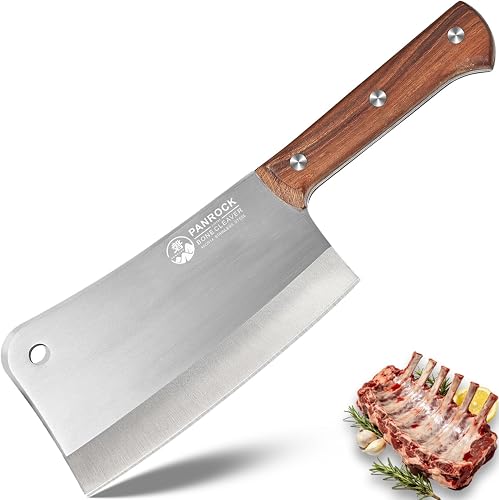 |  |  |
|---|---|---|---|---|---|---|---|---|---|---|
| Product | Juvale Meat Cleaver | Victorinox Fibrox Pro Boning | Kitory Meat Cleaver | Mercer Culinary Millennia Boning | Big Bones Cleaver | Outdoor Edge RazorBone | Victorinox Fibrox Breaking | PANROCK Butcher Knife | Victorinox Wood Boning | imarku Meat Cleaver |
| Brand | Juvale | Victorinox | Kitory | Mercer Culinary | ZENG JIA DAO | OUTDOOR EDGE | Victorinox | PANROCK | Victorinox | imarku |
| Best for | Best Overall | Best for Deboning | Best for Frequent Use | Best for Trimming | Best for Large Cuts | Best for Field Processing | Best Breaking Knife | Best for Bone Chopping | — | Best for Vegetables |
| The listing says | 8-inch stainless steel blade Suitable for home and professional use | Sharp, curved deboning blade Non-slip handle | Heavy-duty axe shape for bones High-quality material for frequent use | One-piece high-carbon Japanese steel Ergonomic handle with non-slip grip | Cuts through shank, ribs, and bones Full-tang, triple-riveted construction | Six interchangeable 420J2 stainless steel blades Blaze orange GFN handle with rubber | Wide blade for breaking down meat High-carbon stainless steel edge | 4.5mm thick 40Cr14 steel blade V-shaped edge for chopping bones | Narrow, curved blade for trimming Wear-resistant stainless steel with wood handle | Japanese high carbon stainless steel Damascus laser texture prevents sticking |
| More information | Buy on Amazon | Buy on Amazon | Buy on Amazon | Buy on Amazon | Buy on Amazon | Buy on Amazon | Buy on Amazon | Buy on Amazon | Buy on Amazon | Buy on Amazon |
1. Juvale Meat Cleaver
Best for: Home cooks needing one versatile kitchen tool.
This 8-inch stainless steel cleaver is designed for tasks ranging from heavy meat cleaving to vegetable prep. Its ergonomic wood handle is built for comfort during long sessions, and the integrated hanging hole keeps it accessible in busy kitchens.
The Juvale Meat Cleaver focuses on general utility, whereas the Kitory Meat Cleaver is specifically forged for higher-impact bone-breaking tasks. If you only need one knife for a mix of cutting jobs, this model provides the necessary balance. It isn’t for users who specifically require a specialized axe-style tool for professional slaughterhouse work.
If you’re processing large cuts of beef brisket or thick vegetables, use the blade’s full length to distribute force evenly. The listing doesn’t mention dishwasher safety for the Juvale Meat Cleaver. Always hand wash and dry immediately to preserve the steel’s edge.
Choose this tool if your primary goal is a reliable, all-purpose blade for home kitchen prep. If your workflow involves heavy-duty, repetitive bone-chopping, you should look for a thicker, specialized butcher’s axe to avoid dulling this blade prematurely.
- Pros:
- Versatile 8-inch stainless steel blade
- Ergonomic wood handle for comfort
- Integrated hole for easy storage
- Cons:
- Not designed for fine dicing
- Wood handle requires hand washing
2. Victorinox 6 Inch Curved Fibrox Pro Boning Knife with Semi-stiff
Best for: Chefs requiring precision when separating meat.
This Swiss-made tool features a curved, 6-inch, semi-stiff blade that makes deboning chicken or fish efficient. The non-slip handle ensures a secure grip even when hands are wet, which is a key safety feature for detailed work.
If your primary task involves navigating around joints or removing silver skin, the curved geometry allows you to follow the contours of the protein with minimal resistance. Use this knife for delicate trimming and fine fabrication. If you’re breaking down larger roasts or primal cuts, the Victorinox Fibrox Breaking knife is the better choice.
Don’t attempt to chop through heavy, dense bones with this tool. The blade is engineered for agility rather than impact. Attempting to force the blade through thick bone will likely damage the edge or cause the semi-stiff steel to flex unpredictably.
- Pros:
- Sharp, curved blade for precision
- Non-slip handle for secure grip
- Dishwasher safe for easy cleaning
- Cons:
- Not for chopping bones
- Semi-stiff blade limits heavy force
3. Kitory Meat Cleaver
Best for: Frequent heavy-duty kitchen environments.
This cleaver features a heavy-duty axe shape specifically built for breaking bones and cutting through thick meat. The Wenge wood handle provides a sophisticated look while maintaining the robustness needed for demanding tasks.
Because this knife is forged using traditional techniques, it offers high durability, contrasting with the more modern, replaceable-blade design of the Outdoor Edge RazorBone. If you primarily slice vegetables or boneless fillets, this tool will feel cumbersome and overkill. Reserve this blade for tasks requiring significant force, such as splitting joints or butchering primal cuts.
If you’re a casual cook who rarely works with raw, bone-in proteins, the weight and specialized geometry will hinder your prep work. However, for professionals or enthusiasts managing whole carcasses, the edge retention and structural integrity justify the heft.
-
Pros:
- Heavy-duty axe shape for bones
- High-quality, durable materials
- Elegant Wenge wood handle
-
Cons:
- Heavy, specialized design
- Not for light cutting
4. Mercer Culinary M23820 Millennia Black Handle
Best for: Professionals prioritizing ergonomic safety.
The one-piece high-carbon Japanese steel construction makes this blade easy to sharpen and maintain. Its standout feature is the textured handle with finger points that prevent slipping during repetitive tasks like deboning chicken, ham, or fish.
If you’re trimming fat or sinew, the non-slip grip provides the control necessary for precision work. This focus on safety makes it a strong competitor to the Victorinox Wood Boning. However, if you prefer the natural feel of wood, this synthetic handle will feel alien.
To maximize performance, wash the knife by hand with mild soap and warm water immediately after use. Never submerge it for long periods or place it in the dishwasher.
- Pros:
- High-carbon Japanese steel blade
- Ergonomic, non-slip handle design
- Easy to maintain sharpness
- Cons:
- Not dishwasher safe
- Handle material is synthetic
5. Big Bones Cleaver
Best for: Butchering large cuts like ribs, knuckles, oxtail, and lamb legs.
Engineered with an axe-like design, this cleaver uses a longer handle to act as a lever. This geometry multiplies your swing force while protecting your wrist from strain during heavy impacts. The Big Bones Cleaver is forged from 7CR17MOV steel hardened to 55 HRC.
This tool is a powerhouse compared to more agile, lightweight cleavers. It isn’t for someone looking for a multi-purpose kitchen knife. If you need to perform delicate tasks like dicing vegetables or slicing herbs, use a thinner, lighter blade. This cleaver is optimized specifically for chopping through dense bone and hard frozen foods. Using it for fine work will feel clumsy and ineffective, as the weight is intended for high-impact force rather than precision control.
Each blade undergoes over 40 manual procedures and a specialized cold-forging process to increase density. This traditional construction delivers a lifespan that exceeds mass-produced alternatives. Always prioritize a clean, direct strike to maintain the integrity of the full-tang, triple-riveted handle.
- Pros:
- Axe design multiplies swing force
- Durable high-carbon stainless steel
- Full-tang, triple-riveted construction
- Cons:
- Too heavy for fine dicing
- Specialized for bone and frozen food only
6. OUTDOOR EDGE RazorBone Replaceable Blade Folding Hunting Knife with Clip
Best for: Hunters and field processing.
This folding knife comes with six interchangeable Japanese 420J2 stainless steel blades, allowing you to switch between boning, gutting, and skinning. The blaze orange handle is rubberized to provide a solid grip in wet or bloody field conditions.
The kit includes two 5.0-inch boning blades, three 3.5-inch drop-point skinning blades, and one 3.5-inch gutting blade. You should swap these blades whenever you transition from initial field dressing to precise meat processing. This tool is designed for portability, weighing just 6.4 ounces with its sheath.
If you’re processing game in the field, the blaze orange handle ensures you can locate your gear quickly in brush. However, if you prefer a permanent, single-blade tool that never requires swapping parts, this system isn’t for you. Home kitchen users who prioritize a stationary, heavy-duty cleaver should look elsewhere.
- Pros:
- Interchangeable blades for versatility
- Lightweight and portable design
- Rubberized grip for wet conditions
- Cons:
- Requires storing extra blades
- Not for heavy-duty chopping
7. Victorinox Fibrox 8-Inch Curved Breaking Knife
Best for: Breaking down meat into smaller roasts.
The wider, curved blade provides the extra weight needed to slice through meat evenly without tearing. Like other Victorinox models, it’s NSF approved and features a textured, non-slip handle that minimizes wrist tension.
Use this knife when your primary goal is portioning large cuts into uniform pieces. If you find your meat falling apart or tearing during the process, the added mass of this blade will correct the issue. However, if your task requires intricate deboning around tight joints, choose a thinner, more flexible boning knife instead. Using this rigid breaking blade in tight spaces often leads to wasted meat and damaged edges.
- Pros:
- Wider blade for uniform slicing
- Ergonomic, non-slip handle
- Dishwasher safe and hygienic
- Cons:
- Lacks flexibility for tight deboning
- Sharpening tool sold separately
To maintain the high-carbon stainless steel edge, use the manufacturer-recommended sharpeners. Regular honing ensures the blade remains sharp enough for professional culinary work. Because the handle is slip-resistant even when wet, it remains safe for high-volume butcher environments.
8. PANROCK Heavy Duty Butcher Knife
Best for: Professional-grade bone chopping.
Made from a single piece of 40Cr14 steel, this 4.5mm thick blade is built for high-impact tasks. The handle is 20% longer than standard cleavers, which provides extra leverage and helps reduce fatigue during prolonged use.
If you’re processing ribs, pork bones, or lamb chops, the full-tang construction provides the stability needed for heavy-duty strikes. Use the flat of the blade to crush garlic or ginger, and rely on the spine to tenderize meat.
This focus on leverage makes it a strong alternative to the Juvale Meat Cleaver. It isn’t for home users who want a lightweight tool, as the heavy, thick blade is designed specifically for bone-chopping tasks. If you feel the knife slipping during a strike, ensure you’re gripping the rosewood handle firmly; the extra length is meant to absorb the shock of the impact.
- Pros:
- Extra-thick 4.5mm blade
- Longer handle for extra force
- One-piece full-tang construction
- Cons:
- Heavy for casual use
- Requires hand washing
9. Victorinox Wood 6″ Boning Knife
Best for: Users who prefer a traditional aesthetic.
This knife features a narrow, curved, semi-stiff blade that’s ideal for agile trimming and deboning. The maple handle offers a classic, natural feel while maintaining the high quality expected from Swiss-made cutlery.
Choose this model if you value tactile feedback and the warmth of wood over synthetic grips. The semi-stiff 6-inch blade provides enough backbone for precise cuts but remains flexible enough to navigate around joints. If you’re trimming silver skin or removing fat caps, the curvature allows for smooth, continuous strokes that straight blades often miss.
It’s a more traditional choice compared to the Mercer Culinary Millennia Boning. It isn’t for someone who wants the low-maintenance, dishwasher-safe benefits of modern plastic or rubberized handles. Because the maple handle is porous, you must hand-wash it and apply food-safe mineral oil periodically to prevent cracking. Ignoring this maintenance will cause the wood to dry out and eventually separate from the tang. Never use this blade for chopping through bones, as the thin, semi-stiff edge is designed for delicate separation, not heavy-duty impact.
10. imarku 7.5 Inch Meat Cleaver
Best for: Balanced performance and food release.
The laser-etched Damascus pattern on this 7.5-inch blade is more than aesthetic. It creates a concave texture that prevents food from sticking, allowing you to slice through produce and boneless meats without constant interruption.
Its design focuses on general kitchen utility rather than heavy-duty demolition. If you need to break down large joints or hack through dense bones, look elsewhere; this blade is optimized for slicing, chopping, and mincing. Using this tool for heavy bone-on-bone work risks damaging the edge, as the steel is tempered to HRC57 ± 1 for a balance of hardness and edge retention.
The widened, thickened blade serves as a practical scraper to gather ingredients from your cutting board. You can also use the flat side to press garlic or ginger, which speeds up prep time. The ergonomic white wax wood handle resists moisture, but you must wash it by hand to preserve the wood’s integrity. If you prioritize a tool that transitions from fine vegetable work to meat preparation, this cleaver fits the role.
- Pros:
- Damascus laser texture prevents sticking
- Ergonomic white wax wood handle
- Versatile for meat and vegetables
- Cons:
- Not for heavy bone chopping
- Wood handle needs hand washing
How to Choose in Sixty Seconds
Blade Weight and Force
When dealing with bone, weight is your best friend. A heavy, thick blade uses gravity to do the work for you, which is essential for chopping through ribs or knuckles. Look for cleavers with full-tang construction and a thicker spine, such as the Big Bones Cleaver or the 4.5mm thick PANROCK chopper. If the blade is too light, you’ll struggle to power through dense joints.
If your task is removing meat from a bone without cutting the bone itself, skip the heavy cleavers entirely. You need a lighter, thinner, and more flexible blade, such as the Victorinox Fibrox Pro Boning or the Mercer Culinary Millennia, to navigate around joints and cartilage without damaging the meat. Using a heavy cleaver for delicate deboning leads to wasted meat and torn sinew.
Handle Ergonomics and Grip
Butchery involves slippery surfaces, whether from fat or field conditions. A handle must provide a secure, non-slip grip to keep you safe. Rubberized or textured handles, like those on the Mercer Culinary Millennia or the Outdoor Edge RazorBone, offer the best control in wet or bloody environments.
If you prefer a traditional feel, wood handles are common, but they often require more careful hand washing to prevent splitting. Always confirm if the handle is designed to minimize wrist strain. For heavy-duty chopping, look for a longer handle, which acts as a lever to multiply your force. If you’re processing large quantities of meat, an ergonomic handle that fits the curve of your hand is the difference between a productive session and significant wrist fatigue.
Maintenance Requirements
Most high-quality knives, especially those with wood handles or high-carbon steel, require hand washing to prevent damage. High-carbon steel is prone to corrosion if left wet, so you must rinse and dry it immediately with a soft towel. Never submerge these knives for long periods.
Some professional-grade knives, particularly those with synthetic handles like the Victorinox Fibrox line, are dishwasher safe, which can save time. However, even for dishwasher-safe models, hand washing is often the safer bet for longevity. Always check if the manufacturer recommends a specific sharpening tool, as these are often sold separately. Using the wrong sharpener can ruin a specialized edge, so keep the recommended maintenance tool on hand to ensure the blade remains sharp enough to slice through meat without tearing.
Frequently Asked Questions
Can I use a boning knife to chop through bones?
No, you should never use a boning knife to chop through bones. These knives feature thin, flexible blades designed specifically for slicing soft tissue and separating meat from bone. Attempting to chop bone will likely chip or break the blade, so use a heavy-duty cleaver instead.
How do I keep my cleaver sharp after chopping bones?
Frequent impact against hard bone will dull even the highest quality steel over time. You should use a honing rod before each use to realign the edge and a sharpening stone for significant maintenance. Avoid using glass or ceramic cutting boards, as these surfaces will dull your blade instantly.
Is there a difference between a breaking knife and a boning knife?
Yes, there is a significant difference in their intended use. A boning knife is narrow and flexible for precise trimming around joints, while a breaking knife is wider and more rigid for processing large carcasses. Use the breaking knife for initial heavy cuts and the boning knife for final cleaning.
Do I need to worry about the handle material regarding hygiene?
Synthetic, non-slip handles are generally preferred for hygiene because they are moisture-resistant and prevent bacteria buildup. Wood handles are comfortable but porous, requiring thorough washing and drying after every use. Regardless of the material, proper hand washing and complete drying before storage are essential to maintain sanitation.
Closing
Selecting the right tool for cleaning bones requires matching the blade’s weight and design to your specific task. The Juvale Meat Cleaver serves as an excellent all-around choice for those who need a mix of chopping and cutting utility, while the Victorinox Fibrox Pro Boning remains the gold standard for delicate deboning work.
Before you make your final selection, consider the amount of bone-in protein you handle regularly. If you find yourself frequently breaking down large joints, prioritize a heavy-duty axe-style cleaver like the Big Bones Cleaver or the PANROCK chopper; these use handle leverage to save your wrists from strain. If you’re trimming fat or sinew from smaller cuts, choose a curved, semi-stiff boning knife like the Mercer Culinary Millennia.
Never use a thin-bladed boning knife for heavy chopping, as the edge will chip or crack under the impact of bone. Conversely, don’t attempt fine dicing with a thick, heavy-duty cleaver, as it lacks the necessary precision. Once you have identified your primary need, check the handle material to ensure it fits your preference for maintenance. Wood handles offer elegance but often require careful hand washing, while synthetic grips like Fibrox provide a non-slip surface that’s dishwasher safe.